

Tareq Al-Tarhouni is head of the Department of Renewable and Sustainable Energy Engineering at Omar Al-Mukhtar University. He stated Libya is rich in traditional energy sources. These include oil and natural gas. Oil forms the backbone of the Libyan economy. It is the main source of national income.
Al-Tarhouni told Sputnik news agency that Libya also has enormous renewable energy potential. This primarily includes solar and wind power. This potential stems from its unique geographical location. Libya also has vast land areas. Its solar radiation levels are high. Global shifts towards reducing carbon emissions emphasize clean energy reliance. This makes it crucial to study how to employ renewable energy in Libya. It could contribute to reducing oil dependency. Renewable energy might also partially replace oil in the future.
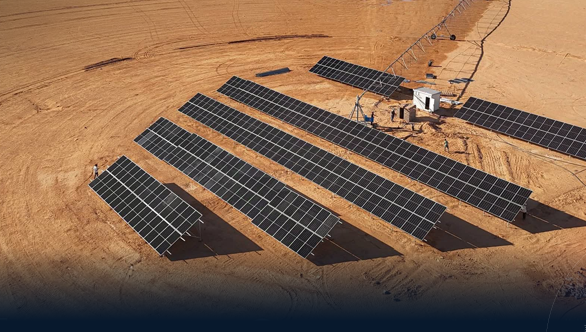
Solar energy is Libya’s most prominent renewable source. The country ranks among the world’s best for solar potential. Average solar radiation ranges from 5.5 to 7.5 kilowatt-hours per square meter daily. Libya receives over 3,000 hours of sunshine annually. This is especially true in southern regions like Sabha, Ghat, and Al-Kufra. Solar energy applications in Libya include electricity production via photovoltaic cells. It also involves building solar thermal power plants. Solar power can also be used for water desalination. It can operate agricultural wells. Cooling and air conditioning systems are other uses.
Regarding wind power, Al-Tarhouni explained that wind speeds in several Libyan coastal areas are significant. These areas include Tripoli, Misrata, and Derna. Speeds range from 6 to 8 meters per second. These are suitable for generating electricity. This can be done using onshore and offshore wind turbines. Libya also possesses biomass potential. This is less than its solar and wind capabilities. Agricultural waste, organic waste, and animal waste can be utilized. They can produce biogas, thermal energy, and electricity.
Expanding renewable energy projects offers many advantages. These include reducing fossil fuel consumption. It eases pressure on traditional power plants. It also cuts carbon emissions contributing to global warming. Moreover, it improves grid stability. Libya often suffers from frequent power outages. It also experiences high loads during summer. Decentralized solar systems can provide electricity to remote areas. These areas are difficult to connect to the main grid. Renewable energy also creates job opportunities for youth. These include design, installation, maintenance, and manufacturing. High-quality Libyan sands could be used to manufacture silicon and solar cells in the future.
However, Libya’s renewable energy sector faces several challenges. A major challenge is the significant economic reliance on oil. Infrastructure is weak. The electricity grid is dilapidated. There is a lack of research centers and local manufacturing. The initial cost of renewable energy projects is high. Storage systems are also expensive. Political division hinders foreign investment. The absence of regulatory legislation also impedes it. Weak security and administrative stability are further deterrents. This contrasts with countries like Jordan, Egypt, Tunisia, and Morocco. These nations have made significant progress in this field.
Regarding renewable energy replacing oil, Al-Tarhouni believes a complete replacement by 2035 is unlikely. Libya’s economy relies almost entirely on oil revenues. The industrial structure is tied to fossil fuels. Oil also remains the primary source of hard currency. However, he stressed that renewables can cover a large portion of local electricity demand. They can also reduce domestic fuel consumption. They can improve energy efficiency. In the long term, between 2040 and 2060, renewables could become a key economic component. This requires serious investment in infrastructure. It also needs green hydrogen project development. Support for scientific research is vital. Smart grids and modern storage systems are also necessary.
Al-Tarhouni explained Libya has a great opportunity. It could become a regional hub for solar energy and green hydrogen. This is due to abundant solar power. Its vast areas and proximity to Europe also contribute. He expects green hydrogen to play a significant future role. It will impact transport, heavy industry, and clean energy exports.
In conclusion, Al-Tarhouni called for a comprehensive national renewable energy strategy. He urged support for residential and industrial solar projects. Developing investment-encouraging legislation is crucial. Establishing specialized research centers is important. Expanding academic and technical programs is also necessary. Additionally, modernizing the national electricity grid is needed. Expanding green hydrogen projects is also key. He affirmed Libya’s energy future lies in an “energy integration” model. This model combines oil, renewables, and green hydrogen. This would diversify income sources. It would ensure energy security and sustainable development. It would also reduce environmental emissions.