

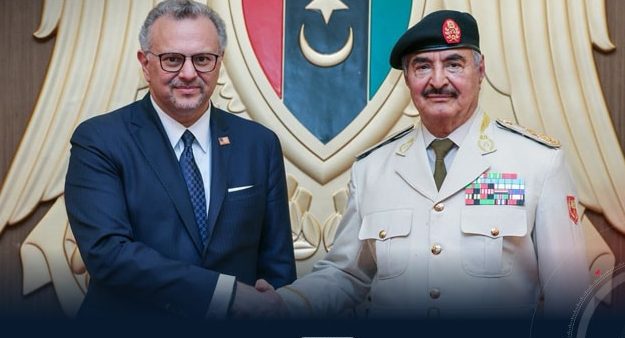
Libya – Political science professor Youssef Al-Farsi said the “4+4” committee agreement marked a significant success. He credited the support of the General Command of the Armed Forces, led by Field Marshal Khalifa Haftar and Deputy Commander General Saddam Haftar, as a main factor in reaching the deal.
Speaking in a phone interview with Libya Al-Hadath TV, Al-Farsi noted that previous efforts involved the “6+6” committee, supervised by both the House of Representatives and the State Council. He believes the House of Representatives worked to address obstacles facing that committee, while the State Council rejected several conditions that were ultimately agreed upon in the “4+4” committee.
Al-Farsi highlighted that controversial issues included the eligibility of military officials and dual nationals to run for office. He said internal positions within the State Council contributed to the failure of the “6+6” track.
According to Al-Farsi, the “4+4” committee’s work became more transparent after surpassing the hurdles presented by the House of Representatives and the State Council. He praised the committee members and said the successful outcome only came after overcoming previous obstructions.
Al-Farsi stressed that the General Command, under the direct leadership of Haftar, had worked for a long time to find a solution amid Libya’s worsening situation. He said the agreement was reached between the General Command and the Dbeibah government. He pointed to a series of foreign visits by General Saddam Haftar and related political, security, and economic efforts to rally support.
He considered these efforts instrumental in pushing the political process forward and securing international backing for the agreement.
However, Al-Farsi criticized the Dbeibah government’s performance, saying it failed in several areas. He added that the overseas actions of the General Command and its deputy increased their influence and bolstered political progress.
He also said that ongoing developments intersect with the efforts of the United Nations and the U.S.-led initiative headed by Musaed Boulos.
Al-Farsi believes the “4+4” committee would not have succeeded without U.S. support. He said that while the UN mission has worked for years in Libya, the committee’s recent achievements represent clear progress, especially by resolving disputes over election laws.
He warned that the momentum gained from the agreement must be maintained under international supervision. He expects sanctions against parties attempting to disrupt the implementation of the agreement. Al-Farsi emphasized that the next stage requires safeguarding the process and building on these gains.