

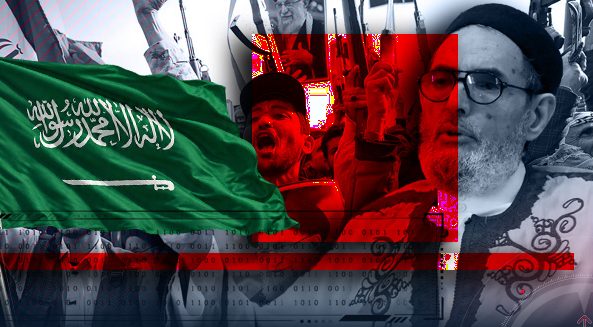
Libya – Sadiq al-Ghariani, the former Grand Mufti removed by the Libyan parliament, called on Muslims to support Houthi control of the Bab al-Mandab Strait if faced with a choice between the Houthis and the United States or Saudi Arabia. Speaking on the al-Tanasuh TV channel, al-Ghariani, who is designated as a terrorist by Gulf states and Egypt, claimed that such support would increase pressure on Washington and Israel.
Al-Ghariani alleged that Saudi-led air and missile strikes in Yemen do not genuinely back Yemen’s legitimate government, but are instead carried out on behalf of the United States. He said the U.S. faces difficulties in the Strait of Hormuz and disputed American claims of control and stability in global oil markets. He added that the U.S. fears Houthi advances toward Bab al-Mandab, claiming that Houthi control would expose what he described as Washington’s false claims of victory.
Al-Ghariani framed his call to support the Houthis as a matter of overlapping interests, arguing that it would help Palestinians in Gaza and the West Bank by increasing pressure on the U.S. and Israel. He criticized Muslims for remaining passive about the Palestinian cause and said that some religious leaders avoid supporting the Houthis out of fear of backlash. He insisted he was speaking about the current situation, not the Houthis’ past actions in Yemen, and asserted that they now stand with the Palestinians.
In response, Yemen’s Ministry of Endowments and Guidance said al-Ghariani’s statements were based on false or incomplete information and ignored the realities of the conflict. The ministry said issuing religious rulings on Yemeni lives and security requires careful understanding of events on the ground. It rejected the idea that the war is simply between Yemen and Saudi Arabia, saying it is fundamentally a conflict between Yemenis defending their state and armed Houthi forces, whom the ministry accused of ties to Iran, defying national consensus, and attacking mosques and Quranic schools. The ministry recounted the trajectory of the conflict, including the Houthis’ takeover of Sana’a and Aden, and noted that the Yemeni government requested Arab coalition support, which Saudi Arabia began on March 26, 2015.
The ministry accused the Houthis of threatening shipping, neighboring countries, and Islamic holy sites, and causing harm to millions of Yemenis. It urged al-Ghariani to reconsider his position and collaborate with Yemeni scholars, warning that his stance legitimizes the Houthis’ actions and misleads public opinion. The ministry, led by Sheikh Turki al-Wadi’i, said al-Ghariani should focus on condemning attacks on Islamic holy sites.
In Benghazi, Libya’s Supreme Fatwa Committee condemned al-Ghariani’s remarks, accusing him of inciting unrest and supporting what it described as deviant factions, recalling his previous endorsement of so-called “Khawarij” groups. The committee’s statement used sectarian language to denounce the Houthis and their supporters, emphasizing that any attack on Islam’s holy sites is an attack on all Muslims and must not be supported.
The committee also reiterated that al-Ghariani has been removed as mufti since 2014 under Law No. 8 passed by the House of Representatives, and that the committee alone is authorized to issue religious rulings in Libya. It accused him of continuing to assume the title of mufti illegally.