

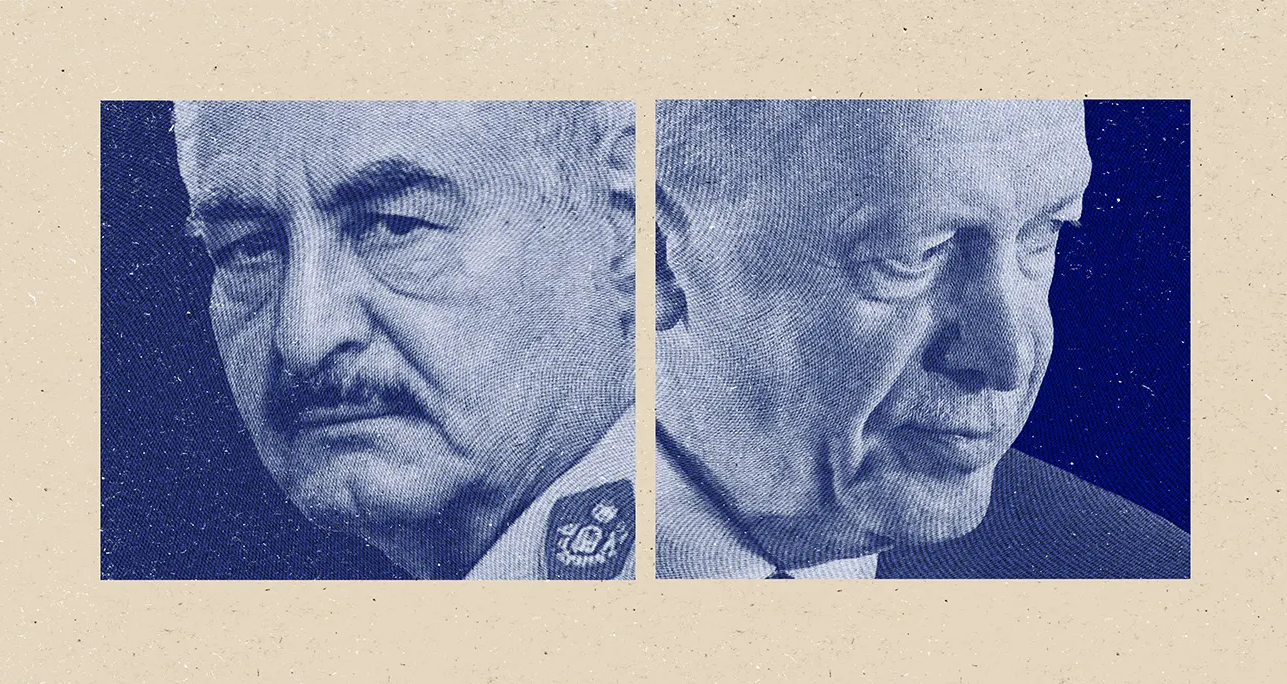
The “Geopolitical Desk” platform published an in-depth analysis on the shift in Turkey’s position in Libya, moving from open hostility with the Libyan National Army (LNA) to a gradual rapprochement that could evolve into a future political and military partnership. The analysis reviews the trajectory of this transformation from the 2020 Tripoli War to 2025.
From the Tripoli War to a New Perception of Influence
The analysis explained that Ankara, which supported the Government of National Accord (GNA) during the Tripoli War, was seeking a decisive victory at the time by pushing LNA forces eastward toward Ar-Rajma. However, Libyan diplomats warned Turkey that its bets on armed factions in the West would not succeed, and that the path to success lay through the stability represented by the East, led by the LNA.
Ankara Discovers Stability in the East is the Key to Influence
Four years later, the report indicated that Turkey found itself stuck in the chaos of Western Libya, unable to find a reliable partner, and gradually began to shift its compass toward the East. It noted that Turkish companies have already signed cooperation agreements in construction, energy, and military coordination in Benghazi, amid an internal Turkish discussion about the possibility of “embracing Haftar” (General Commander Field Marshal Haftar) and unifying power under a centralized governance model.
From Hostility to Practical Rapprochement
The analysis highlighted that Ankara and the LNA have moved from animosity to a phase of growing political and security cooperation, with the emergence of “Saddam Haftar” (Deputy General Commander Lieutenant General Saddam Haftar) as a primary channel of communication. It quoted a Turkish official as saying: “With Tripoli, we are managing chaos; with the LNA, we are building a state.”
LNA Dominance and the Emergence of Haftar as a Presidential Option
The report stated that 2025 witnessed a clear rise of the LNA, which controls the East and South and commands a unified force. It noted that consultations are expanding among tribes regarding the option of Field Marshal Haftar running for president, while the leadership in Ar-Rajma works to build its own political track independent of the United Nations.
The Turkish-Haftar Alliance: A Possible Option
The analysis indicated that the LNA offers Turkey a stable partner, unlike the divided authorities in the West, and that common interests in energy, security, and Mediterranean navigation unite the two parties. It also pointed out that Turkey sees Haftar as a strong leader, similar to President Erdoğan in his view of centralized authority and the ability to impose order.
Obstacles to the Alliance
Despite this, the report clarified that Ankara remains hesitant due to the lack of a clear political vision within the LNA and its fear of losing influence in Western Libya. It noted that Haftar is growing stronger while the West is again sinking into chaos.
A New Crossroads
The report concluded that Libya stands today at a new crossroads, and that a Turkish-Haftar alliance is no longer out of the question, given the failure of the UN roadmap and the ongoing state of political and diplomatic exhaustion. It considered this alliance to be potentially the most significant step in reshaping the future of power in Libya.