

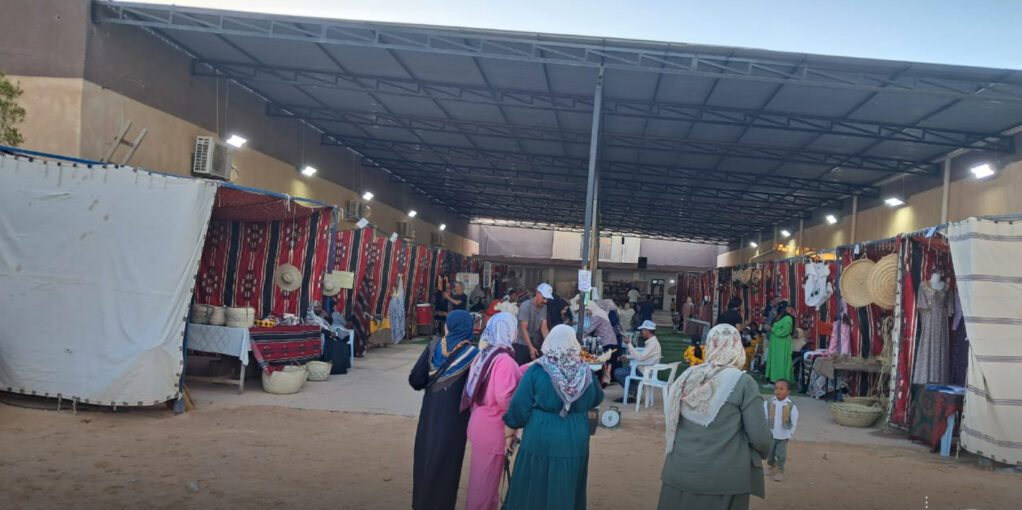
Waddan – The first edition of the Waddan Heritage and Folk Arts Festival concluded Saturday in the historic city of Waddan, following four days of cultural, artistic, and heritage activities. The festival brought together participants from across Libya, showcasing a wide range of traditional crafts, industries, and arts rooted in popular memory.
The closing day featured a diverse program highlighting the history and landmarks of the region. Participants toured the old city of Hun, visited the Washka Dam, and explored a heritage exhibition that displayed antique items, traditional crafts, and local products.
Organizers said the field visits allowed participants to closely experience the architectural and historical heritage of the area. The events were tied to locations that shaped the identity of Jufra’s cities, helping maintain heritage as a living element deeply connected to the people and their collective memory.
The heritage exhibition was a main attraction, presenting handcrafted products and vintage items that reflected the diversity and uniqueness of Libyan heritage across different regions.
The final day included a performance by the Benghazi Cultural, Social, and Sports Forum, joining other cultural and artistic groups from various parts of Libya. Suleiman Shaqlouf, a member of the forum’s media committee, told the Libyan News Agency that artistic programs give cultural and artistic groups the chance to share their experiences and highlight their unique creative traditions.
Shaqlouf said the festival succeeded in uniting these different groups, fostering opportunities for exchange and dialogue, and raising awareness of the distinct cultural heritage of each region.
He noted the program’s variety—from exhibitions and art performances to cultural activities and field trips—gave the event a well-rounded character and celebrated heritage through crafts, traditional industries, oral traditions, and elements tied to the cities’ histories.
The festival ended with a music and poetry evening led by Abdel Qader Al-Marhoon, featuring various artistic performances. The closing ceremony marked the end of a four-day program celebrating Libyan heritage in all its forms.
Shaqlouf emphasized that such festivals go beyond preserving and displaying heritage. They help integrate it into the contemporary cultural scene and inspire artists to reinterpret traditional elements in ways that resonate with younger generations.
Held under the slogan “A Speaking Identity… A History Revived,” the Waddan Festival featured showcases of traditional crafts, folk costumes, heritage artifacts, and local products, along with poetry evenings, artistic nights, and visits to historical and tourist sites.
Throughout the festival, Waddan became a gathering place for groups from across Libya, each presenting a facet of their cultural memory, illustrating the richness and diversity of Libyan heritage, and building new connections among those interested in heritage, arts, and culture.
With the close of its first edition, the festival offered a new model for presenting Libyan heritage—moving beyond traditional displays by connecting heritage with its physical locations, the arts, and cultural tourism. Organizers say this strengthens heritage in public life and supports its preservation and transmission to future generations.