

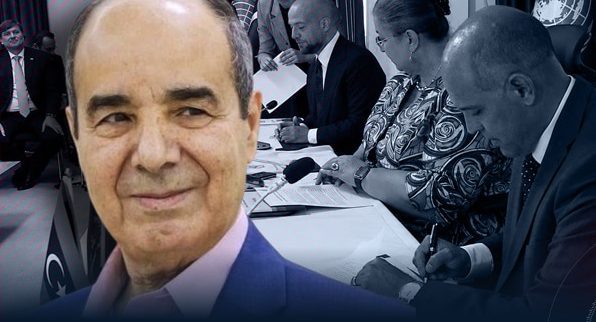
Tripoli – Libya’s former ambassador to the United Nations, Ibrahim Dabbashi, said there is no benefit for the public in opposing the “4+4 Agreement,” which marks a significant breakthrough in overcoming the obstacles that have stalled elections.
Dabbashi stated on his Facebook page that the agreement, brokered by the UN Support Mission in Libya between the General Command and the Government of National Unity, represents important progress in the country’s political crisis. He noted that the official signing of the deal highlighted clear divisions among Libyans, with some supporting, some opposing, and others remaining undecided.
He explained that most citizens are either waiting for more details or are less concerned about who governs, focusing instead on how the country is governed and on the need to end their daily hardships.
Dabbashi pointed out that, in his view, some opponents of the agreement reject it outright because they oppose the participation of a specific figure in the government, fearing exclusion from decision-making and seeing their ideological ambitions under threat. Another group opposes the deal on the grounds that it extends the power of corrupt officials, perpetuates public suffering, and delays progress toward elections.
Dabbashi described the agreement as a “major breakthrough” in overcoming the barriers that have prevented presidential and parliamentary elections. He emphasized that, like any political deal, it is a compromise and cannot fully satisfy every party.
He said the agreement is the best outcome the UN could achieve amid deep divisions among key Libyan stakeholders and growing foreign interference due to conflicting major power interests and divisions within the UN Security Council.
Dabbashi noted that there is no alternative currently capable of changing the situation on the ground, nor is there anything forcing the main parties to give up control over the areas they govern. He warned that continuing the current situation could last for years or trigger another devastating war. He argued that the agreement is a gain that should be supported rather than opposed.
He stressed the need for all segments of society to unite and apply peaceful pressure to ensure the agreement is implemented for the benefit of all. Dabbashi said the outcome should be unified authorities made up of capable, honest, and professional figures who can build strong institutions that are accountable and uphold both their dignity and the prestige of the state.