

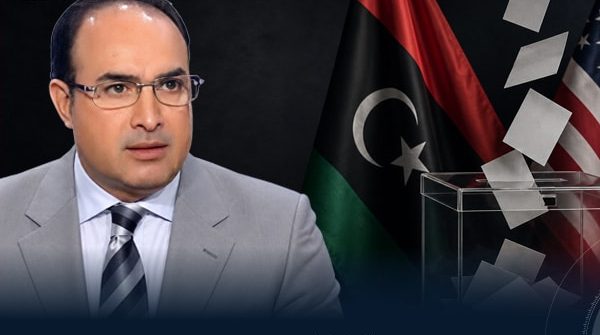
Political analyst Kamel Al-Marash said the national sovereignty, stability, and prosperity project launched by Field Marshal Khalifa Haftar more than a decade ago is now yielding tangible results. He stated that the understandings reached by the 4+4 Joint Committee are central to this process, which is unfolding amid rapid local, regional, and international developments.
Al-Marash, speaking to Libya Al-Hadath TV, said that replacing the Speaker of the House of Representatives, along with the emergence of new leadership committed to addressing the crisis, has generated positive momentum and helped advance the implementation of the committee’s agreements.
He accused the government of Abdul Hamid Dbeibah of creating local crises and using drones, following shifts in security alliances in northwestern Libya that have increased pressure on the government. Al-Marash claimed these attempts have failed and are now in the past.
He noted that regional and international parties are monitoring the government’s actions. Al-Marash expects that by October 14, observers will decide whether the Dbeibah government is obstructing the agreement. He called on UN envoy Hanna Tetteh to clearly identify any spoilers in her upcoming briefing to the Security Council.
Al-Marash alleged that a recent European Union recommendation to classify the Muslim Brotherhood as a terrorist organization would escalate pressure on the group. He also sharply criticized Sadiq Al-Ghariani, the Dar al-Ifta, and the Muslim Brotherhood faction, accusing them of fueling chaos. These are the analyst’s views and not independently verified.
He pointed out that the House of Representatives had adopted the 4+4 agreements during Aguila Saleh’s presidency, although these have not been added to the constitutional declaration. Al-Marash described this as a significant move. He suggested the UN mission should label the High State Council as obstructive if it continues to stall, despite a majority of members supporting the agreement and seeking to resolve the crisis.
He argued that some militia leaders in western Libya pose a greater obstacle than the High State Council. Al-Marash accused them of perpetuating disorder for personal gain, and of laundering and sending money to Turkey, with which he claimed they have ties. He also mentioned groups like the Misrata Military Council, which have issued statements.
Al-Marash said Turkey has the power to influence these militia leaders and urged Ankara to use its leverage to end the obstruction and bring parties into the 4+4 process. He described Turkey’s current stance as positive.
He noted that October could be a turning point, with anticipated meetings in London or Berlin aimed at forming a unified government and presidential council for all of Libya. According to Al-Marash, if successful, this step could lead to presidential and parliamentary elections within less than two years.
Al-Marash concluded by praising Major General Saddam Haftar for his role in advancing the political process and expressed hope that this contribution would continue.