

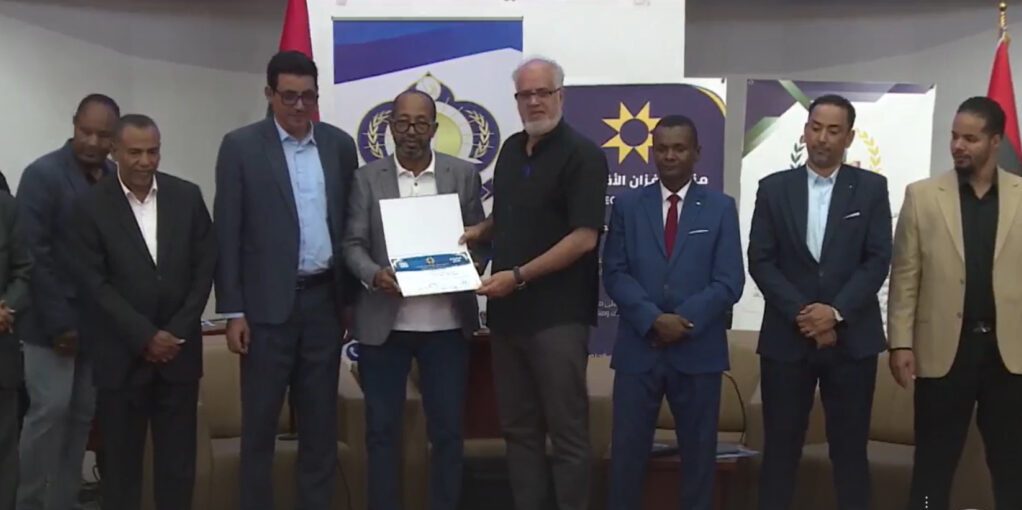
Sabha – Participants at the 2026 Fezzan International Economic Forum recommended creating an Economic Development and Investment Council for the Fezzan region. The council, in coordination with relevant government institutions, would oversee economic and investment efforts, monitor the implementation of development plans and projects, and promote partnerships between the public and private sectors. The aim is to invest the region’s abundant resources and drive sustainable development.
At the conclusion of the forum, participants emphasized Fezzan’s significant economic and strategic assets, including natural resources, mineral wealth, agricultural potential, and solar energy. They also highlighted Fezzan’s strategic geographic location, which offers the potential to become a key economic and trade gateway linking Libya with neighboring African countries and the Sahel-Sahara region.
The attendees called on Libyan authorities to prioritize Fezzan in economic policies and development programs. They urged fair distribution of projects and investments, solutions to regional development disparities, and better use of local resources based on sustainable planning and real priorities.
Participants advocated for a comprehensive investment map for Fezzan. This map would include data on opportunities, priority sectors, and projects in southern cities and regions, as well as their economic needs and capacities. They also pushed for the establishment of specialized economic and investment zones, as well as incentives to attract capital and encourage both local and foreign investments, to diversify income sources and create new jobs.
In terms of investment and the private sector, the forum stressed the importance of improving the business environment. Participants recommended updates to legislation and administrative procedures, and simplifying processes for establishing enterprises and launching economic activities. These measures aim to increase investor confidence and promote productive and service projects in the region.
They also called for strengthening public-private partnerships in strategic projects, attracting local and international companies and investors, and providing financing and technical and management training for small and medium-sized enterprises. This is seen as a key approach to energize the local economy and grow the production base. Additionally, the forum recommended establishing an integrated investment platform to share information and opportunities, connect investors with public institutions, and facilitate investment-related inquiries.
On infrastructure and services, participants stressed the need to develop road networks, airports, and border crossings to improve connectivity within Fezzan and link it to the rest of Libya and neighboring countries. They also called for upgrades to electricity, water, telecommunications, and sanitation, as well as the development of logistics centers, storage, transportation, and specialized commercial areas to support trade and investment.
In the agriculture and food security sectors, the forum highlighted the importance of supporting agricultural investment, modernizing irrigation and production systems, and establishing agro-industrial projects. Participants recommended building storage, refrigeration, and marketing facilities to reduce waste and increase the value of local products, opening new markets for Fezzan goods.
They called for programs to protect water resources, rationalize their use, combat desertification, and preserve natural resources. Collaboration between investors and research institutions was encouraged to advance the agricultural sector, improve productivity, and establish specialized plant protection centers to safeguard crops and control agricultural pests.
In the energy and mining sectors, participants recommended investment in renewable energy and taking advantage of Fezzan’s significant solar capacities. They called for technical and economic studies to assess mineral and natural wealth and identify investment opportunities based on scientific research.
The forum also highlighted the importance of promoting manufacturing, using local raw materials, and encouraging technology transfer and skills development in energy, mining, and related industries.
On trade and African cooperation, participants advocated for positioning Fezzan as a strategic gateway for economic exchange with African neighbors. They supported developing border crossings, improving their operations, and modernizing trade-related services. The forum called for commercial partnerships with Sahel and Saharan countries, organizing economic fairs and conferences to promote local products and investment opportunities, and reviewing laws governing local and foreign investment and cross-border trade to ensure smoother trade flows and greater competitiveness.
Regarding human development and empowering productive groups, recommendations focused on increasing youth participation in economic activities and entrepreneurship. Training programs in vocational, technical, and administrative fields should align with labor market needs to qualify national talent and create job opportunities. The forum also encouraged educational and research institutions to expand collaboration with the private sector, link scientific research with development needs, and increase women’s participation in economic projects by creating a supportive environment for women entrepreneurs.
For governance, administration, and implementation, the participants suggested forming a committee to monitor forum outcomes. This committee would coordinate with relevant authorities, develop clear timelines and responsibilities, and establish evaluation mechanisms to ensure a shift from recommendations to effective action.
They emphasized the importance of holding the Fezzan International Economic Forum on a regular basis. This would provide an ongoing platform for economic dialogue, sharing expertise, reviewing investment opportunities, and assessing achievements and challenges, with active involvement from government, the private sector, and international partners.
To turn these recommendations into practical results, the forum proposed several initiatives, including the Fezzan Investment and Development Initiative to promote investment opportunities and forge partnerships with local and international investors, and the National Initiative for African Economic Integration to strengthen Fezzan’s role in cross-border trade and expand economic cooperation with neighboring countries.
Other initiatives included the Fezzan Investment Map Project to create a comprehensive database of projects and priorities, as well as the Youth and Entrepreneurship Initiative to support startups and productive ventures with training, funding, and qualification. The Energy and Sustainable Development Initiative aims to expand renewable energy investment and improve efficient use of resources. A mechanism was also proposed to follow up on the implementation of all recommendations, ensuring continuous cooperation among government bodies, the private sector, and international partners.
Participants stated that these recommendations and initiatives represent a framework for joint action to convert Fezzan’s economic and strategic assets into real opportunities for development and investment, helping to diversify the national economy, achieve sustainable development, and strengthen the region’s role in trade with African neighbors.
They stressed the need to move from recommendations to action through practical programs and partnerships, ensuring the participation of all relevant institutions and sectors. The goal is to achieve tangible development results, improve services, create jobs, and boost economic activity in Fezzan’s cities and regions.