

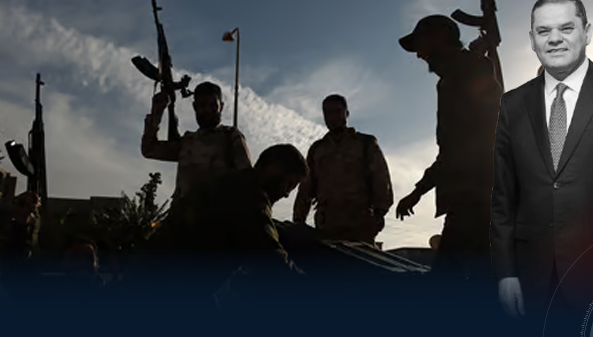
Tripoli – Political analyst Kamel Al-Marash accused the government of Abdul Hamid Dbeibah of obstructing the progress of the 4+4 Committee. He warned that changing alliances and competition for influence could lead to escalating conflict among rival groups in western Libya next October.
Al-Marash told Libya Al-Hadath, as reported by Al-Marsad newspaper, that the committee had succeeded in breaking the political stalemate. He said the current challenge is to dismantle obstacles blocking its meetings and the implementation of a plan to unify the government and key institutions. He described this step as crucial for advancing efforts in accordance with the vision of Field Marshal Khalifa Haftar.
Al-Marash said that the Dbeibah government is stalling and hesitant to remove obstacles, while opposition groups threaten to resort to arms. He warned that shifting alliances will not favor Dbeibah, as time is not on his side and he needs to clarify his position.
He called on armed groups under the 4+4 umbrella to take a clear stance against factions openly threatening to start a new war. He stressed that real progress requires a decisive position from the Dbeibah government.
Addressing the High Council of State, Al-Marash claimed it had tried to derail the process through Egypt and Turkey, but failed. He said the swift response to this was a recommendation for the council to engage constructively with the 4+4 Committee.
He also accused other countries of acting as spoilers. He described the British role as “malicious” and said it does not want stability in Libya. He urged Italy to support the process more clearly if it wants continued access to Libyan gas, warning that threats to the Mellitah pipeline could harm Italy’s energy supplies, especially in the north. These challenges come as alliances shift and Dbeibah’s position in the committee faces growing obstacles.
Al-Marash predicted that October will bring surprises. He said the long-standing alliance between the Zintan and Misrata tribes is nearing its end, and that its breakup could benefit western Libya by ending the coalition that has dominated the past two years.
He expects new alliances to emerge. He pointed to the risk of war breaking out in Zawiya and possible renewed fighting in Tripoli over control of key areas. He also warned of a “horizontal war” stretching from Zuwara and Nalut to Misrata and Tripoli next October. Al-Marash said this would be a blow to those hoping for stability, and would likely compel international intervention to restrain the armed groups.
Al-Marash linked the anticipated conflict to the desire of all ruling factions in western Libya to secure their share of future spoils. He praised the position of the Libyan National Army, saying it has gained international trust. He did not rule out the possibility that powerful countries could call on the army to intervene to protect unarmed civilians. Al-Marash warned that civilians would be the first victims if fighting breaks out.