

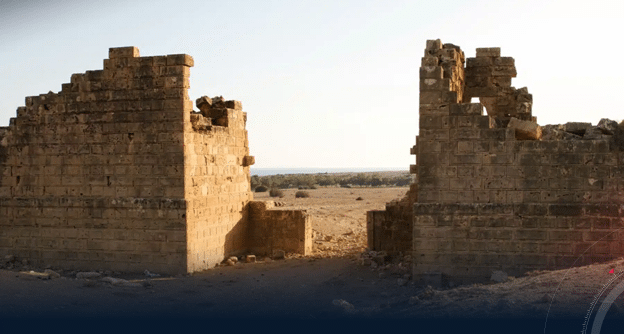
Libya – Archaeologists have deciphered 626 stonecutter marks on the gate of Taucheira, an ancient Greek site in the city of Ptolemais on Libya’s northern coast. This discovery offers new insights into the gate’s construction, as well as the organization and funding of the project.
According to a report from Greek Reporter, the study suggests the gate was built during the reign of Ptolemy VIII in the second century BC. Archaeologist Anna Urszula Cordas from the Faculty of Culture and Arts at the University of Warsaw led the research, which was published in the European Journal of Archaeology.
The report notes that the gate is the best-preserved section of Ptolemais’s fortifications. The city was founded by the Greeks and later became part of Egypt’s Ptolemaic Kingdom. Although the gate has attracted attention from visitors and researchers for centuries, the stonecutter marks had not been thoroughly studied until now.
Cordas used photographs taken by a Polish archaeological mission in Ptolemais in 2006, along with digital mapping software, to locate all the marks on the gate’s two towers. She classified them into 27 types divided into two main groups.
The first group appears on rough, unpolished stones often hidden from view, and is likely linked to quarrying or transportation. The second group was carved carefully on the smooth exterior surfaces of the towers.
Cordas concluded that the markings indicate two separate systems for organizing labor and wage payments. Some marks use a simple sequence of Greek letters, suggesting that workers were divided into teams labeled with different letters. Other, more complex symbols may represent the names of workshop owners or donors who helped finance the construction.
The research found that both towers of the gate were built at the same time, not sequentially as German archaeologists suggested in a 2002 study. Cordas believes the construction was accelerated due to urgent defensive needs.
While builder marks were typically concealed after construction, the Taucheira gate deliberately left them visible. This may have served as a public tribute to labor teams or benefactors, similar to how ancient Greek cities honored their patrons.
Cordas also compared the letter shapes in the gate marks to other dated inscriptions in the region. A nearby inscription mentioning a visitor from the Greek island of Rhodes provided further evidence that the gate was built in the first half of the second century BC.