

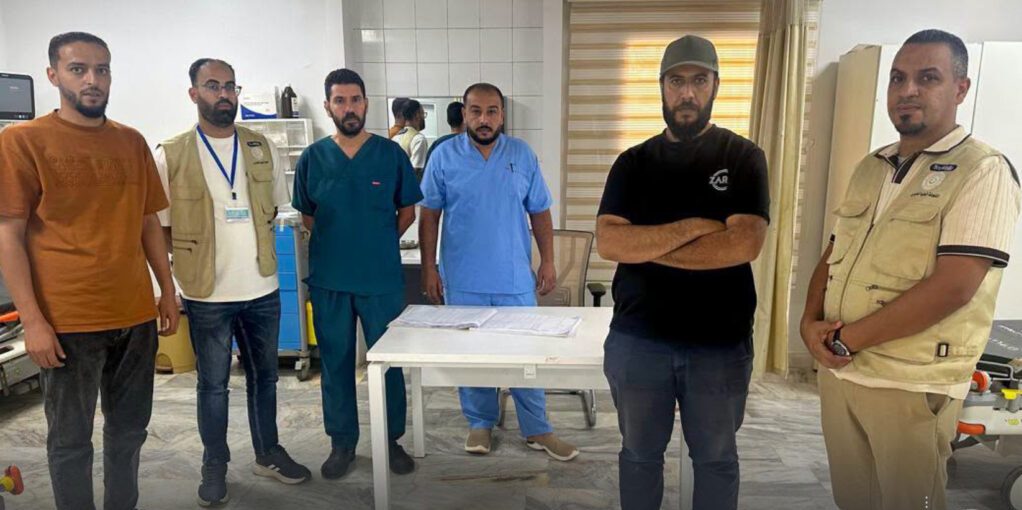
Benghazi – The Higher Emergency Committee of the Ministry of Health has conducted field visits to several health facilities in eastern Libya and the Green Mountain region. The tours aimed to assess the readiness of these centers to respond to emergencies caused by changing weather conditions and to ensure the continuity of medical services for citizens.
During the visits, the committee reviewed the preparedness of medical and support staff, availability of essential medicines and supplies, and the readiness of emergency and ambulance departments to handle incidents related to the weather. They also evaluated the ability of medical teams to respond quickly to a variety of situations.
The committee inspected power generators and checked that sufficient fuel was available to operate them. Ambulance vehicles and other emergency response means were examined to ensure they could be mobilized as needed. The goal is to maintain uninterrupted operation of health facilities and protect essential services from potential disruptions.
Coordination between health centers and other relevant bodies was also reviewed. The committee examined communication procedures and information exchange protocols to guarantee a rapid response to any developments and effective management of available resources according to actual needs.
These inspections were carried out under the direction of the deputy commander-in-chief and the Prime Minister, with follow-up by the Health Ministry’s general undersecretary. The efforts are part of a ministry plan to boost preparedness and strengthen quick response capabilities by directly identifying and addressing needs as they arise.
The committee also checked evacuation plans, movement routes, procedures for receiving patients, and the readiness of operating rooms and critical departments. They assessed whether staff could handle increased patient loads or sudden surges.
Emphasis was placed on the importance of coordination between health administrations and teams, as well as on the rapid reporting of shortages in medicines, equipment, or fuel. This approach aims to meet needs before they escalate and to ensure a strong response during exceptional circumstances, ultimately aiming to reduce risks and safeguard citizens.
The committee stated that field visits will continue in health facilities across eastern Libya and the Green Mountain area. Additional needs will be monitored, and necessary actions will be taken to strengthen preparedness and ensure that medical services remain available in all circumstances.