

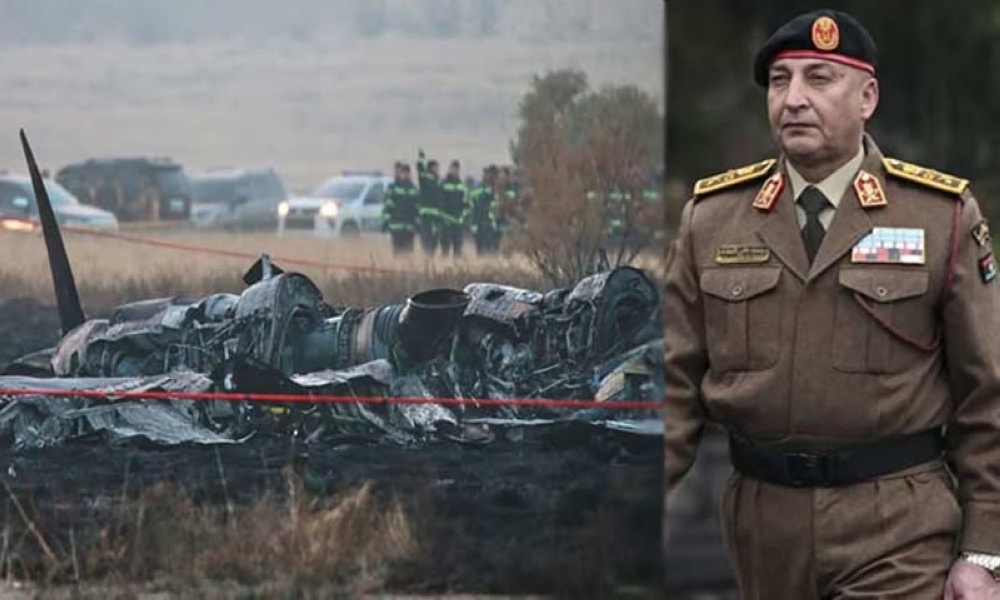
Benghazi – The plane crash carrying Lieutenant General Mohammed Al-Haddad sparked wide social media interaction. Al-Haddad is the Chief of Staff of the Libyan Army in the Government of National Unity. The accident occurred last Tuesday in Turkey. Some users circulated theories of sabotage or undeclared motives. No official statements have indicated non-technical causes for the incident.
Observers believe this reaction reflects a common pattern. This pattern follows major political or military incidents. It is particularly true in complex political and security environments. Human emotions often intertwine with unconfirmed analyses.
Lieutenant General Mohammed Al-Haddad is a well-known military figure. His name has been linked to efforts supporting military institution unification. News of his death garnered widespread attention in Libya and abroad. This led to increased public questioning about the crash circumstances.
Experts affirm that aviation accident investigations follow precise technical procedures. They adhere to strict international standards. Sufficient time is required to analyze available data. This includes black box recordings and wreckage examination. Final, conclusive results are then established.
Experts emphasize relying on information from competent authorities. It is crucial to avoid speculation or premature conclusions. This is especially true given the rapid spread of unreliable information online.
Media specialists note the nature of digital platforms. They rely on rapid interaction and sensational content. This sometimes amplifies unconfirmed narratives. Official statements, urging patience, receive less attention.
Social media’s leaning towards conspiracy theories regarding Al-Haddad’s crash lacks evidence. It results from a complex interaction. This includes political shock, historical memory, and information gaps. Weak trust and the nature of the digital space also contribute.
It is important to distinguish between theoretical possibilities and proven facts. No hypothesis can be ruled out in principle. However, only technical investigations can turn probabilities into realities. As of now, no official data indicates sabotage. The technical hypothesis remains the most plausible, based on available data.
The 1944 Chicago Convention on International Civil Aviation states this. The state where an accident occurs is responsible for the investigation. Other relevant states can participate in an advisory capacity. This ensures transparency and information exchange, adhering to approved rules.
Observers stress that responsible handling of such incidents requires awaiting official investigation results. These results are the sole reference for determining causes. This approach avoids unsubstantiated conclusions. Such conclusions could mislead public opinion. They might also deepen chaos in the Libyan scene.