

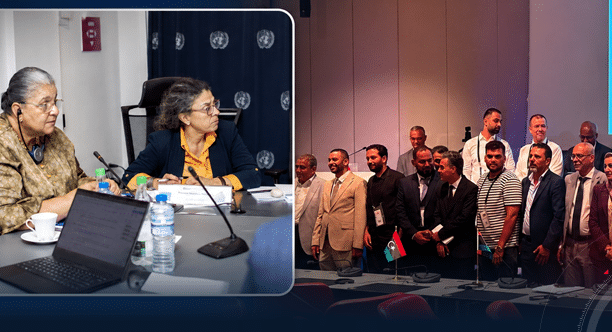
An analytical report published by the Al-Ain news network described the so-called “Geneva Government,” recently announced in Switzerland and sometimes referred to as Libya’s “third government,” as a new test for the United Nations-led peace process in Libya. The report stated that the announcement by the Geneva Dialogue Forum, which selected Mustafa Al-Mujdoub as the head of a “unified Libyan government” outside of established UN and constitutional tracks, has sparked renewed political debate amid heightened international efforts to resolve the Libyan conflict.
The movement to unify Libya’s executive authority is being led by the United Nations Support Mission in Libya (UNSMIL), in coordination with regional and international initiatives, as well as U.S. efforts to end years of institutional division. The report noted that the Geneva Government has become the focus of discussion within Libya, with questions arising over who supports it, how it would operate alongside the two existing governments, and its lack of constitutional or legal legitimacy.
Libyan experts cited in the report said the announcement is unlikely to translate into reality but raises questions about its timing and motivations. They warned it could disrupt ongoing international initiatives or attempt to introduce new negotiating dynamics that risk perpetuating the crisis.
Political analyst Mohamed Imteirid said it is too early to identify the backers of this group. He emphasized that the announcement’s circumstances, the location, and the lack of official opposition prompt legitimate concerns. Imteirid suggested that the move may aim to impose new power balances, obstruct current initiatives, or force negotiations with American officials, especially at this sensitive moment for Libya.
He asserted there are no clear indications as to the wider political aims behind these developments but called for legal and diplomatic measures, given the lack of any legal basis. Imteirid added that the emergence of a third government undermines the credibility of ongoing efforts, particularly the U.S.-led initiative to unify institutions, and signals to the international community that Libya remains politically fragmented. An overabundance of initiatives, he said, weakens the impact of all.
Imteirid noted that choosing Geneva as the site for the announcement was deliberate, taking advantage of Switzerland’s neutrality and its suitability for political events, making it a platform for sending messages and testing new initiatives on the global stage.
Ahmed Ehhouma, a member of Libya’s State Council, said the Geneva initiative has no legitimacy and does not represent Libyans. He described the decision to declare a third government as ill-considered and unlikely to gain popular support. Ehhouma stressed that any political project in Libya requires the consent of neighboring countries, the UN mission, and influential international actors, regardless of whether it is presented as a purely Libyan initiative.
He questioned where the new government could operate, given the west is controlled by the Government of National Unity and the east and south by the parliament-backed government and the Libyan National Army. Ehhouma said the move would not affect existing proposals, including the initiatives from the three councils, Massad Boulos, or the Quartet Committee under UN auspices.
Writer Idris Ehmid described announcing a third government from Geneva as a gamble with Libya’s future and a distraction from genuine solutions. He accused those behind the move of trying to maintain their own relevance, stating that the initiative became a subject of ridicule among Libyans. Ehmid argued it lacks a real foundation and public support, and claimed that secret backers are trying to hinder political settlement efforts. He pointed out that the UN’s statement denying knowledge of these moves demonstrates their marginal impact.
According to Ehmid, Libyan public opinion views such initiatives as an affront to the country’s standing and sovereignty, making it unlikely they will be accepted.
The report concluded that the Geneva Government was announced at a time when the international community is seeking a political settlement to end division and unify Libya’s institutions. Any parallel initiatives outside established frameworks, it said, raise questions about their intentions, timing, and capacity to impact the official peace process.