

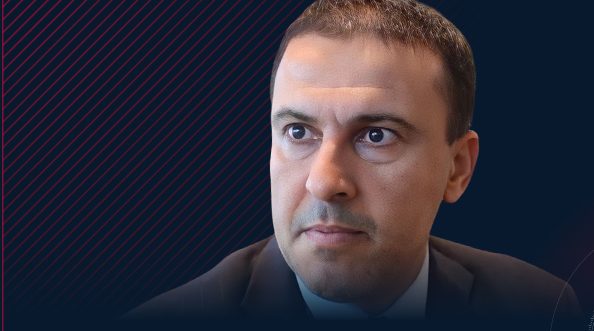
Former General National Congress member Abdul Monem Al-Yassir stated. He made this statement to Al-Sharq Al-Awsat newspaper. Al-Yassir said the conflict in Libya is no longer only political or military. It has also become a war over information. It is a war over people’s perception of reality. He believes misleading information can sometimes be more impactful than traditional weapons.
Al-Yassir explained the spread of forged data serves several main objectives. These include disrupting the political scene. They also aim to fuel conflicts between rival parties. Another goal is undermining the credibility of institutions. Sometimes, it involves testing reactions to potential political scenarios.
He noted this phenomenon has manifested in several recent incidents. One such incident involved Osama Hammad. Hammad is the head of the government appointed by the parliament in eastern Libya. He was subjected to a forged statement announcing his resignation. The statement also claimed the dissolution of his government to prepare for elections. This was officially denied later. An “media team” affiliated with the interim Government of National Unity (GNU) led by Abdul Hamid Dbeibeh was accused of promoting it. Hammad’s government also denied another document. This document discussed approving public debt for 2026. The debt amounted to 110 billion dinars.
Al-Yassir added that these incidents were not limited to one party. A media platform affiliated with the GNU denied the authenticity of a statement attributed to Dbeibeh. The statement concerned not handing over power before elections. Dbeibeh himself denied inaccurate reports about his health. This followed his heart surgery in early January. The Presidential Council also had to deny a statement attributed to its head, Mohamed Al-Menfi. This statement concerned the complete removal of fuel subsidies. The Council confirmed it was incorrect.
Al-Yassir stated that some strategic literature classifies these practices as “fourth-generation warfare.” Digital tools and artificial intelligence are features of “fifth-generation warfare.”
He added that this type of warfare is not new. States and intelligence agencies have used it for decades. However, a significant shift occurred with the spread of social media. Social media has made the dissemination of misleading information faster. It has also made it more impactful.