

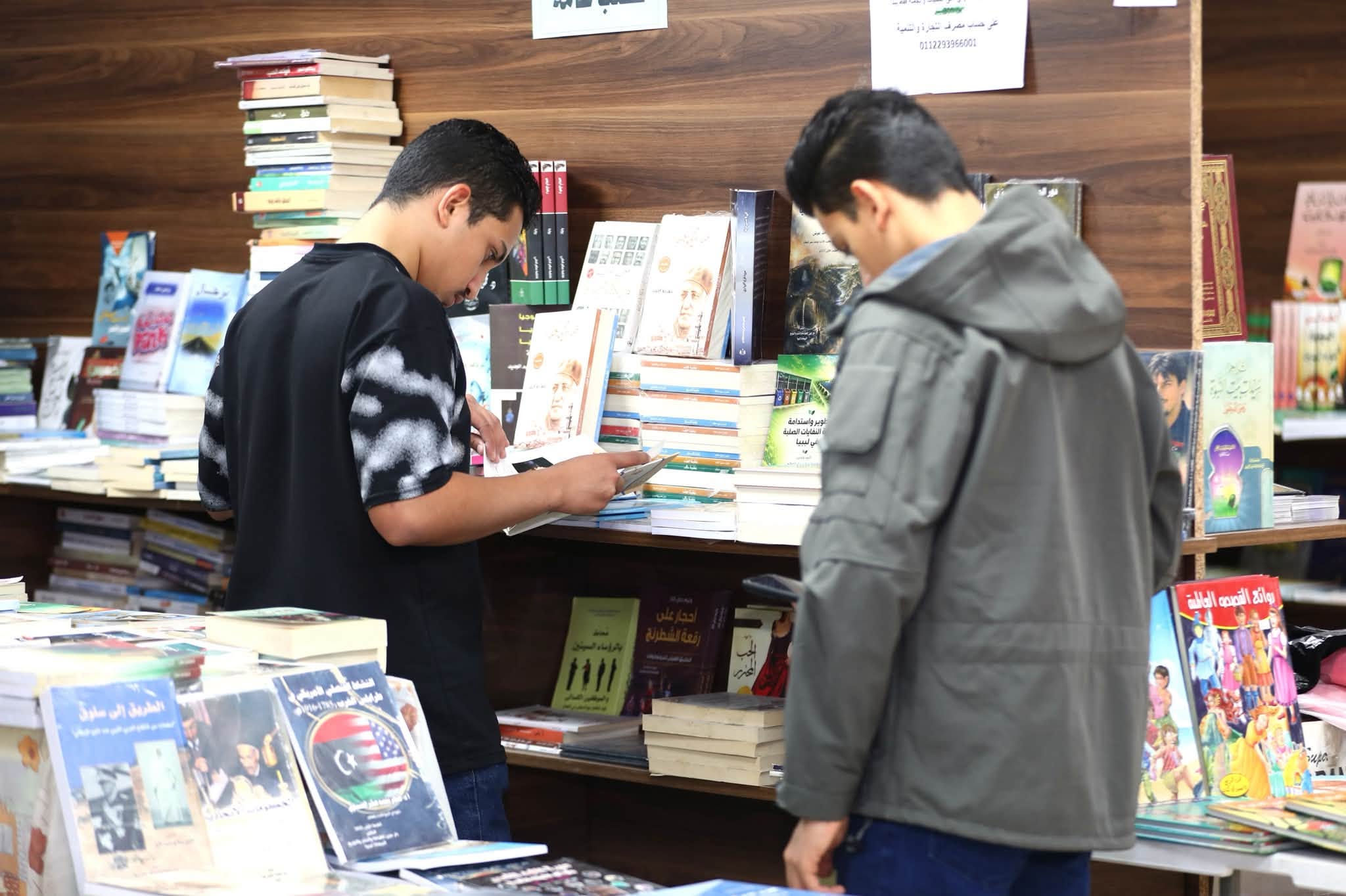
Benghazi – Cultural evenings and programs continue alongside the fifth edition of the Benghazi International Book Fair. The events, organized under the theme “Generations Meet and Visions Renew,” are overseen by the Cultural Committee and feature a selection of writers, poets, and intellectuals.
The program covers poetry, literature, and creative writing. It includes literary analysis, readings of novels, and panel discussions. There is a special focus on showcasing young talents, giving them an opportunity to share their experiences and discuss the development of writing in Libya.
On Thursday, the cultural forum in the main hall hosted a seminar on youth writing in Libyan novels. The panel explored the contributions of young authors in shaping the narrative landscape. The session was moderated by writer Awatif Al-Shehibi and attended by literary enthusiasts.
Young writer Mawadda Amqada’ Al-Tarhouni from Tobruk said she participated at the invitation of Cultural Committee Chairwoman Rehab Shneib. She explained that the seminar discussed the participants’ early experiences in writing, different ways to start a story—from character or concept—and the authors who influenced their literary background.
Writer Qusai Balamaskin, born in 1996 in Brak Al-Shati and a graduate of the Faculty of Science and Technology, highlighted his main works. Among them was his novel “Aqab,” published by Dar Al-Nahda Al-Arabiya in Lebanon, which received a grant from the Libyan Novel Workshop under the supervision of the Arete Foundation for Culture and Arts.
Balamaskin said the session also examined the structure of the Libyan novel and the influence of international, Arab, and local literary schools. Participants discussed factors shaping their styles and experiences, and the critical role of literary critique in developing their work. Additional topics included realism, short realism, magical realism, different genres, and trends in novel writing.
The seminar aims to introduce new literary experiences, open dialogue between generations, and highlight young writers’ contributions to Libyan literature, as well as to address the challenges facing creative writers.
Accompanying cultural events at the fair will continue until November 12. The program includes poetry evenings, panel discussions, and intellectual seminars with writers and intellectuals from across Libya.