
Close Menu
Libya Update NewsLibya Update News
  • Home
  • National
  • Region & World
    • The Maghreb
    • Middle East
  • Business
    • Oil & Gas
    • Economy
    • Analysis
  • Opinion
  • Editors’ Picks
  • Health & Lifestyle
  • Sports
Facebook X (Twitter) RSS
Trending
  • Central Bank Announces 30th Issue of Unrestricted Mudaraba Deposit Certificates
  • Thunderstorms in Western Libya with Flood Warnings as Rain Expected to Extend East Tomorrow
  • Qaminis Municipality Explores Investment Opportunities in Solar Energy and Waste Recycling
  • Agricultural Forum in Al-Marj Discusses Land Challenges and Production Requirements
  • Libyan Airlines Denies Selling Aircraft from Its Fleet
  • Al-Ghariani Calls for Supporting Houthi Control of Bab al-Mandab; Yemen’s Religious Endowments Authority and Libyan Fatwa Committee Respond
  • Central Bank Governor Holds Meetings in London with International Institutions and Banks to Promote Financial Inclusion and Banking Reform
  • Supreme Emergency Committee Monitors Readiness of Health Facilities in the Eastern Region
  • About Us
  • Contact Us
Facebook X (Twitter) RSS
Libya Update NewsLibya Update News
Subscribe
Monday, 21 September 2026
  • Home
  • National
  • Region & World
    • The Maghreb
    • Middle East
  • Business
    • Oil & Gas
    • Economy
    • Analysis
  • Opinion
  • Editors’ Picks
  • Health & Lifestyle
  • Sports
Libya Update NewsLibya Update News
Home » Environmental Sanitation Responds to ‘E. Coli’ Results: River Water Free of Contamination, Problem Lies in Surface Wells

Environmental Sanitation Responds to ‘E. Coli’ Results: River Water Free of Contamination, Problem Lies in Surface Wells

Tuesday, August 11, 2026 Health & Lifestyle 3 Mins Read
Environmental Sanitation Responds to ‘E. Coli’ Results: River Water Free of Contamination, Problem Lies in Surface Wells

Libya – Ibrahim Al-Dakhil, Director General of the General Administration for Environmental Sanitation, responded to findings from the 2024–2025 Multiple Indicator Cluster Survey. The survey, conducted by the Statistics and Census Authority in collaboration with UNICEF, revealed the presence of E. coli bacteria in the drinking water of 46.4% of surveyed households.

Speaking by phone to Libya Al-Ahrar TV, Al-Dakhil explained that the report referenced is based on a pilot survey with UNICEF, and its results should not be seen in isolation from the local context or water sources sampled. The survey found E. coli contamination in 46.4% of all drinking water samples, including 45.6% in urban areas and 53.5% in rural areas. Some regions showed higher rates: Sirte at 91.9%, Al-Jufra at 85.1%, Al-Marqab at 72.4%, Tripoli at 47.8%, and Benghazi at 11.9%. Only 38% of families had access to what is considered “safely managed” water services, while 32.8% of bottled water samples tested positive for the bacteria.

Al-Dakhil stressed the need to clarify sample sources before generalizing the findings. He said pollution levels should be assessed based on sampled locations and water sources, especially in rural areas not connected to the main water system, which rely on private surface wells and storage tanks.

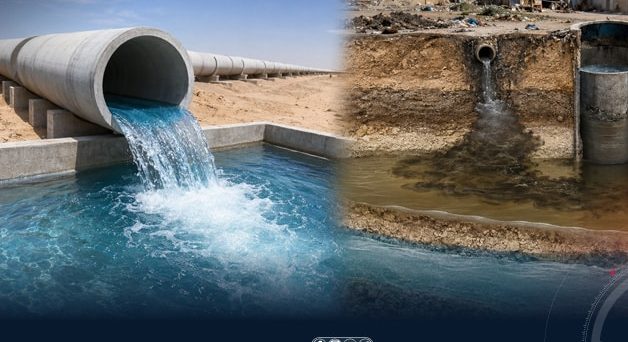
He estimated that about 90% of Tripoli is supplied by the Great Man-Made River, which is subject to regular monitoring and treatment. He assured that water from major networked sources is “reassuring” and shows no signs of bacterial contamination.

Al-Dakhil pointed out that unconnected areas often depend on private surface wells and water stored in tanks that may not be properly cleaned or maintained, increasing contamination risks. He explained that water safety in these areas depends on well construction, location, regular testing, and the cleanliness of storage tanks. He highlighted that a significant part of the problem is how people interact with water sources outside the main network.

He also cited previous studies showing issues with surface wells in coastal regions, especially in Tajoura, where most surface wells suffer from contamination and high salinity. In rural coastal areas outside the reach of the river network or desalination, people often rely on groundwater that may not be safe, leading them to seek water from public taps, desalination stations, or water shops for drinking and cooking needs.

Al-Dakhil reported that most surface and rural wells in Tripoli are contaminated, based on recent analyses, except for some wells in central Ain Zara, which showed better results.

He noted that the administration conducts regular testing of water from public taps and mosque water supplies. Some contamination cases are due to not changing filters or poorly maintained purification units. When detected, recommendations are made to replace filters and improve water quality. Drinking water shops and factories are also subject to periodic laboratory checks, and operators are advised to make repairs when problems arise. Al-Dakhil emphasized that only specialists should collect water samples due to the sensitivity of water to contamination.

He concluded that a sustainable solution demands expanding the water supply network to include areas not linked to the Great Man-Made River or desalination plants. This would reduce reliance on private surface wells. Sources of contamination are varied and not limited to the water supply, he said. Poor storage, open tanks, or lack of cleaning can allow birds and pollutants to enter water supplies.

Follow on Google News Follow on Facebook Follow on X (Twitter)
Share. Facebook Twitter Pinterest LinkedIn Email Reddit Telegram WhatsApp Copy Link
Previous ArticleGeneral Command on the Assassination of Major General Al-Mansouri: We Will Eliminate Terrorism
Next Article Security Affairs Division at General Staff Takes Down Terror Cell, Foils Plot Targeting Citizens’ Safety

Keep Reading

Supreme Emergency Committee Monitors Readiness of Health Facilities in the Eastern Region

Benghazi prepares to launch comprehensive newborn hearing screening program

Medical Insurance Authority Emphasizes Importance of Insurance Against Medical Errors

Nursing Training in Tripoli on Managing Cardiac Arrest Cases

National Center for Animal Health Investigates Sheep Deaths in Southern Tunisia

Food and Drug Control Authority Records Health Violations in Ghat and Al-Jafara

Follow us on Twitter

The Libya Update Verified account Follow

Stay ahead of the curve with The #Libya Update - your go-to source for news and insights on Libyan politics, business, culture, and more. #LibyaNews

TheLibyaUpdate
thelibyaupdate

The Libya Update

Verified account @thelibyaupdate ·
19 Sep

The Director-General of the National Development Agency, Dr. Mahmoud Al-Forjani, discussed in #Benghazi with the Spanish Ambassador to Libya, Javier Soria, opportunities for cooperation in development, investment, and infrastructure, as well as leveraging Spanish expertise to

Reply on Twitter 2101396398692278589 Retweet on Twitter 2101396398692278589 Like on Twitter 2101396398692278589 Twitter 2101396398692278589
thelibyaupdate

The Libya Update

Verified account @thelibyaupdate ·
19 Sep

Agricultural Forum in Al-Marj Discusses Land Challenges and Production Requirements

Reply on Twitter 2101328289444802615 Retweet on Twitter 2101328289444802615 Like on Twitter 2101328289444802615 Twitter 2101328289444802615
thelibyaupdate

The Libya Update

Verified account @thelibyaupdate ·
19 Sep

Libyan Airlines Denies Selling Aircraft from Its Fleet

Reply on Twitter 2101154172070494366 Retweet on Twitter 2101154172070494366 Like on Twitter 2101154172070494366 Twitter 2101154172070494366
libya update
Facebook X (Twitter) RSS

News

  • National News
  • The Maghreb News
  • Middle East News
  • Business News
  • Sports News

Company

  • Information
  • Ethics Policy
  • Corrections Policy
  • Fact-Checking Policy
  • GDPR Policy

Categories

  • Editors’ Picks
  • Opinion
  • Health & Lifestyle
  • Videos
  • Infographics

Subscribe to Updates

    © 2026 All copyrights reserved. The Libya Update.
    • About Us
    • Privacy Policy
    • Advertising

    Type above and press Enter to search. Press Esc to cancel.