

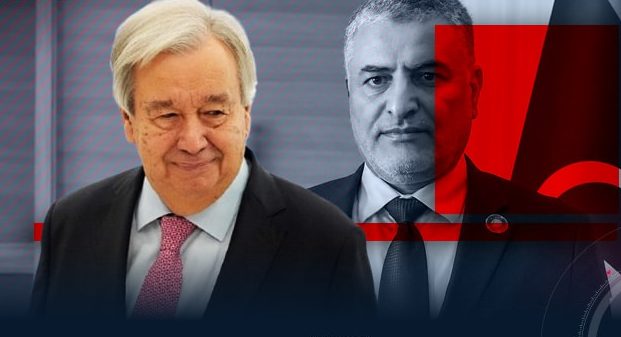
Mohamed Takala, head of the High Council of State, sent a letter to United Nations Secretary-General Antonio Guterres objecting to a recent move by the UN mission in Tripoli concerning the political process and bodies related to elections.
In a daily press briefing, UN spokesperson Stephane Dujarric said Guterres welcomed the House of Representatives’ endorsement of the “4+4” mini-meeting agreement signed on August 30.
Takala rejected the UN initiative and its outcomes. He argued that the mission gathered a limited number of people who, according to him, do not legitimately represent sovereign institutions. He said they prepared a document about the structure of the political process and the formation of bodies involved in elections. Takala called the move an overstep of the UN’s facilitating role and an interference in Libya’s internal affairs and sovereignty.
He insisted that these steps and their results are unacceptable, saying that symbolic attendance does not compensate for legitimate mandate. He added that limited agreements do not impose obligations on institutions that were excluded, and called for closing the gap between constitutional bodies. Takala urged building on the consensus achieved by the “6+6” committee instead of pursuing parallel processes that could deepen divisions.
Takala asked Guterres to ensure the UN mission adheres to its mandate and respects Libya’s political agreement and state sovereignty. He requested that the mission not legitimize bodies with limited representation and to reverse its recent action. Takala said his aim is a consensual, Libyan-led path towards elections, not to obstruct political efforts.
According to Dujarric, Guterres shares the UN mission’s welcome of the House of Representatives’ support for the “4+4” agreement, describing it as a significant step toward overcoming the current political deadlock. The briefing reaffirmed the UN mission’s commitment to supporting a political process led and owned by Libyans, unifying and strengthening national institutions and creating conditions for credible and inclusive parliamentary and presidential elections that meet the aspirations of the Libyan people.