

Benghazi – The Italian-Libyan Chamber of Commerce is set to return to Benghazi on Monday for field inspections in the city center, alongside engineers from the Libyan Development and Reconstruction Fund, according to Italy’s Italpress news agency.
The chamber’s president, Nicola Colicchi, and director, Francesco Moraca, will be joined by a delegation of companies and professionals specializing in restoration, engineering, and construction. Participating firms include Pascualucci, Piacentini, Europa Engineering, and Renco, as well as engineer Paolo Capaldini, who previously worked on post-earthquake restoration in Italy’s Abruzzo region.
The visit follows the “Benghazi Urban” exhibition dedicated to the city’s reconstruction, which was held earlier this month. The exhibition was organized by the reconstruction fund’s director, engineer Belqasem Haftar.
At the event, which took place from September 6 to 8, the chamber coordinated the participation of more than 40 prominent Italian entities—companies, professionals, and organizations—making it the largest foreign delegation at the exhibition.
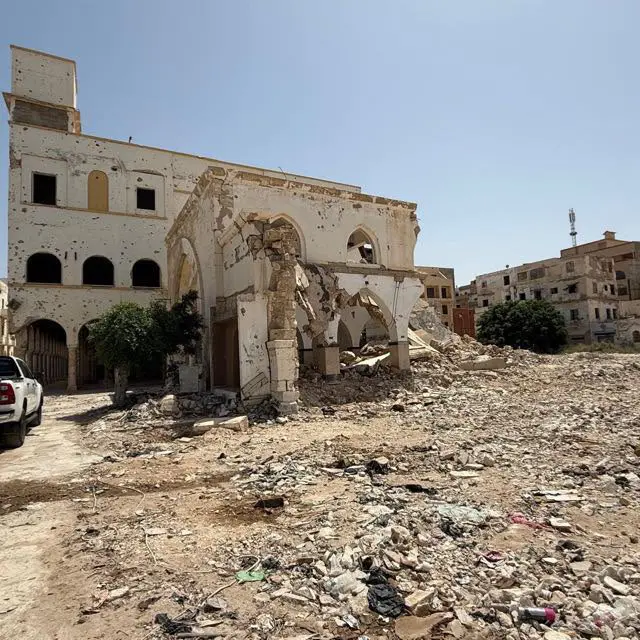
The historic city center is a primary focus of the reconstruction efforts. The area, designed and built by Italians during the last century, suffered severe damage during recent conflicts. On the eve of the exhibition, Colicchi emphasized that the center’s style, names, and architecture are of Italian origin, underscoring Italy’s role in Benghazi’s revival.
The upcoming site inspections are part of ongoing dialogue between the chamber and the fund about restoring Benghazi’s heart. On September 13, the Libyan news agency reported a meeting in Benghazi between the head of the committee for the reconstruction of the Sabri area and central Benghazi, engineer Mohamed Al-Hassadi, and a chamber team accompanied by representatives from Italian specialist firms.
During this meeting, the chamber’s design team presented the master plan for the historic center. The goal is to preserve the area’s architectural identity while accommodating modernization needs.
The committee overseeing the project was established by Fund Decision No. 10 of 2026. Benghazi’s center houses significant Italian architectural heritage, which was damaged by fighting between 2014 and 2017 and later demolition.
There are more than 150 architecturally significant buildings in the area, including the cathedral—which was begun in 1929—the old banking buildings, and the Italian consulate. The Berenice Theater, designed by Marcello Piacentini and Luigi Piccinato, was demolished in 2023.
Pascualucci is a Rome-based Italian firm specializing in construction and restoration, with experience dating back to 1945 in restoring historical landmarks. Piacentini, headquartered in Prato and established in 1875, works on protected buildings and seismic strengthening. Renco is based in Pesaro and operates in engineering, construction, and services. It already has a permanent presence in Libya, with an office in Tripoli and active operations within the country.
Studio Capaldini was among the Italian participants in the previous Benghazi Urban exhibition.
The chamber, a non-profit association founded in Rome in 1997, operates offices in Rome and Tripoli, as well as a representative office in Benghazi, announced during the Italian-Libyan Economic Forum in June 2025, organized in cooperation with the fund.
Previous missions have included Italian companies specializing in engineering, infrastructure, renewable energy, and cultural heritage.