


BENGHAZI – Special Report
Specifically the newly established headquarters known as the “Marshal Khalifa Haftar Military City”—is witnessing intensive activity and high-level meetings bringing together the General Command of the Armed Forces with social and tribal components from across Libya. This momentum emerges at a time when traditional political tracks managed by the UN Mission are experiencing noticeable stagnation, raising questions about the features of the coming phase, which appears to be anchored in a “Libyan-Libyan solution.”
A Qualitative Evolution and Historical Context
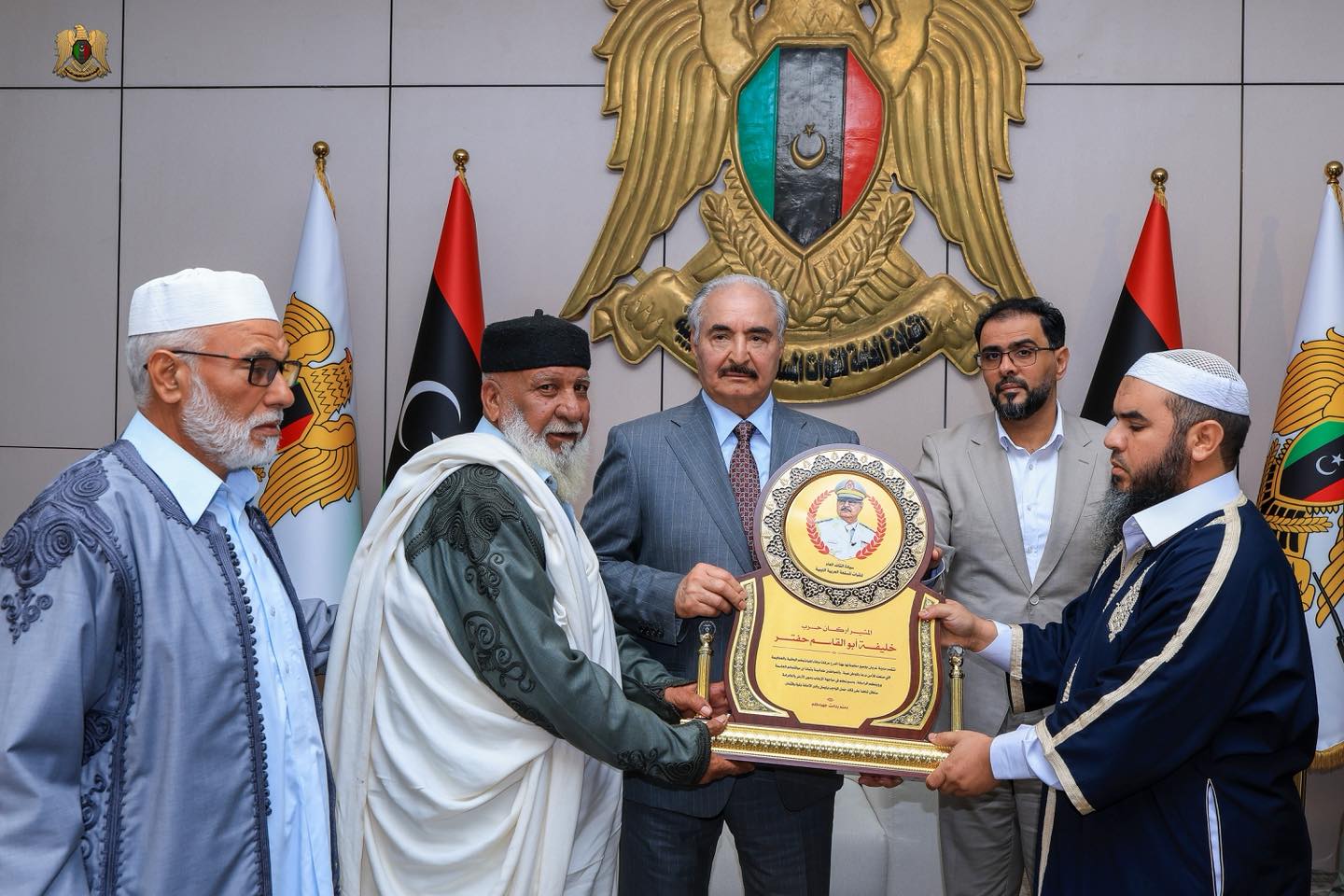
While such meetings generally date back to the launch of “Operation Dignity” in 2014—where the General Command relied from the outset on “social cover” and tribal support as a fundamental pillar, with gatherings previously held at the General Command headquarters in Al-Rajma or Benghazi—the nature of this engagement has evolved.
Recently, these meetings have taken on a new, intensive, and quasi-weekly character following the inauguration of the Marshal Khalifa Haftar Military City in May 2025. The relocation of these events to the “Marshal’s City” reflects a strategic shift from a phase of “military mobilization” to a phase of “partnership in state-building.”
Ending “Absurdity” through Popular Will
According to informed sources, the messages delivered by the Commander-in-Chief, Marshal Khalifa Haftar, during these meetings focus on the core of the crisis: “the absence of national will.” The vision presented rests on a firm conviction that the dysfunction afflicting the state entity cannot be remedied through external arrangements; rather, it requires a purely Libyan resolve.
The content of these meetings indicates the General Command’s drive to enshrine the concept that Libyans are the true stakeholders in change. The narrative emphasizes that a solution can only come through a free popular decision that puts an end to the tracks of absurdity and recklessness that have wasted years in fragile transitional stages, restoring order through strong national institutions.
Trans-Regional Development: Facts on the Ground, Not Promises
What distinguishes the General Command’s current discourse is its reliance on a developmental reality that is effectively expanding beyond the borders of Benghazi. Through the Command’s executive arm, the National Development Agency, the security vision has transformed into strategic national projects that visiting delegations witness in their own regions before arriving in Benghazi.
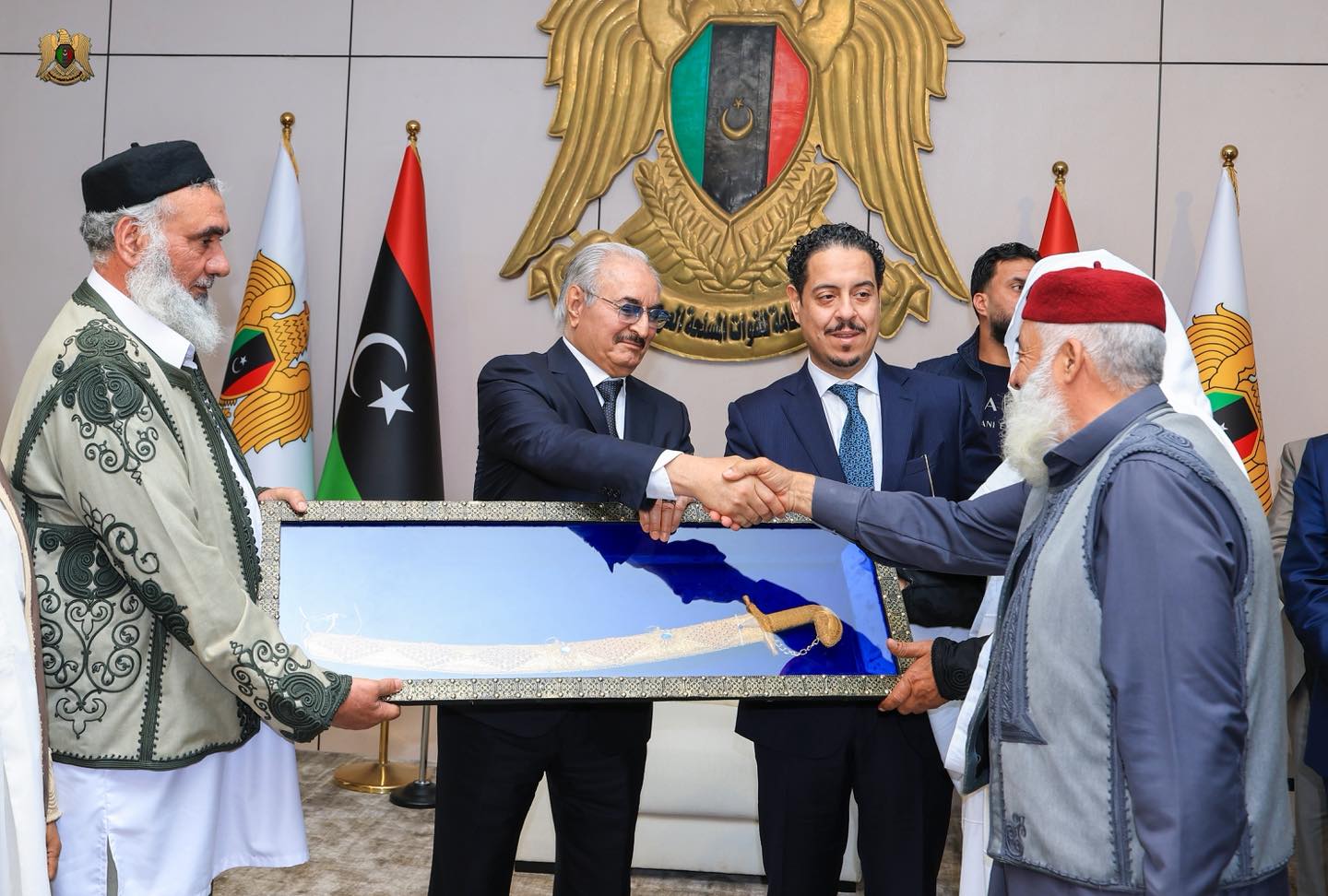
According to observers, the most prominent message Marshal Khalifa Haftar conveys while receiving delegations from the western and southern regions centers on showcasing the “Benghazi Model.” These meetings are not held in tents, but inside modern military and administrative facilities, in the heart of a city witnessing an unprecedented urban renaissance under the auspices of the General Command. This aims to entrench the conviction that “no development is possible without security, and no state exists without an army.”
The wheel of reconstruction has begun to turn, linking the limbs of the nation together: from the strategic International Road project (SSS) connecting Sirte and Suknah to Sebha—a lifeline breaking the isolation of the South—to the Free Zone and Airport projects in Sirte preparing the city to regain its economic centrality, and reaching the major agricultural circle projects in the Southwest aimed at achieving national food security.
These existing projects deliver an eloquent message to the attending delegations: Development here is not a political bargaining chip, but a firmly established work doctrine within the military institution. Bulldozers and construction machinery precede political proposals, confirming that the umbrella of reconstruction is wide enough for all cities that engage in the project of statehood and stability.
Engineering a Comprehensive National Consensus
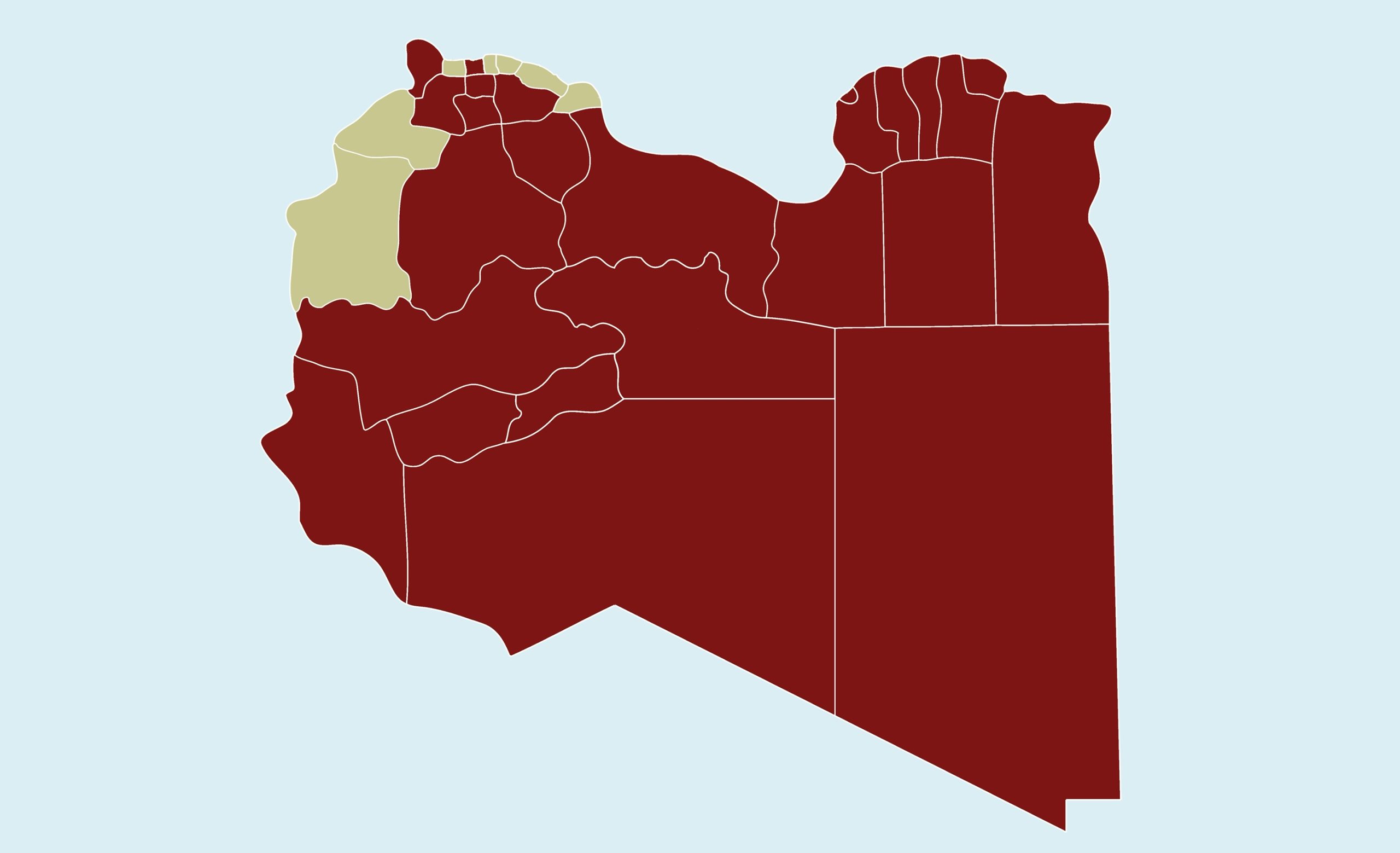
Notable in the recent series of meetings is their geographic inclusivity, extending to include high-level delegations from strategic cities in the West and South (such as Zawia, Zintan, Gharyan, and Tarhuna). This diversity reinforces the proposition that the General Command is working to build a “cross-regional national consensus” that transcends political divisions, aiming to form a unified national front that believes recovering the state begins from within.
Analysts interpret this trend as pulling the rug from under the feet of faltering international tracks, replacing them with the “Legitimacy of Achievement” and direct “Social Consensus” between the Command and the tribes, viewing the latter as the true guarantor of civil peace.
The movement is no longer limited to the traditional social incubator in the East; the General Command’s “soft power” strategy has succeeded in attracting heavy-weight delegations from the Western region (Zintan, Zawia, Gharyan, the West Coast). This regional diversity points to a process of strategic geographic penetration, aiming to isolate political spoilers by neutralizing their social bases and building a cross-regional national bloc that believes in the project of the Army and the State.
Roadmap and Chronology
Coinciding with the map that has become clear to the people regarding the geographic extent of the attending delegations—which also hints at delegations expected in the coming weeks—this timeline documents the density of meetings hosted by the “Marshal Khalifa Haftar Military City” since early October 2025, reflecting the escalating pace of coordination between the General Command and social components:
October 3, 2025: Launch of the expanded movement with a massive gathering uniting the General Command with sheikhs and notables of the Eastern, Central, and Southeastern regions, marking the kickoff of a new phase of national cohesion.
October 19, 2025: Reception of a high-level delegation of sheikhs and wise men from Fezzan (Libyan South), reaffirming the unity of destiny and the South’s strategic role in national security.
October 26, 2025: Renewing the pledge with the social incubator in the Central Region to enhance cohesion in the face of current challenges.
November 2, 2025: A qualitative meeting with the elites and sheikhs of Tarhuna, recalling the city’s sacrifices and its pivotal role in supporting the Armed Forces.
November 5, 2025: Reception of the Zintan delegation, a step with significant political implications reflecting the convergence of national visions between the East and the Western Mountain.
November 9, 2025: Meeting with sheikhs and notables of the Bani Walid (Warfalla) tribes, confirming the role of major tribes in formulating the upcoming solution.
November 12, 2025: Reception of the Zawia delegation, expanding the circle of consensus to include cities of the West Coast with significant population weight.
November 17, 2025: An expanded meeting with representatives of the West Coast regions, entrenching the idea that the solution stems from a comprehensive local will.
November 19, 2025: Reception of sheikhs and notables from the Western Mountain and Batin al-Jabal cities, continuing to paint the picture of comprehensive national consensus.
November 22, 2025: Reception of sheikhs, notables, and wise men of Gharyan, valuing their active role in enhancing social peace and reunification, and supporting paths of comprehensive national reconciliation.
While stagnation persists in diplomatic corridors, it appears the General Command has decisively wagered on an “Internal Alliance,” replacing fragile political agreements with the “Legitimacy of Achievement.” What is happening in the “Military City” is not merely protocol; it is the founding of a new phase where a “Partnership of Security and Reconstruction” imposes a reality that Libyans from all cities can rally around. The General Command is affirming that the true roadmap to end the “era of absurdity” is not drawn in foreign capitals, but is imposed by a unified popular will, supported by a national army and trans-geographic development projects that redefine the concept of the State.