

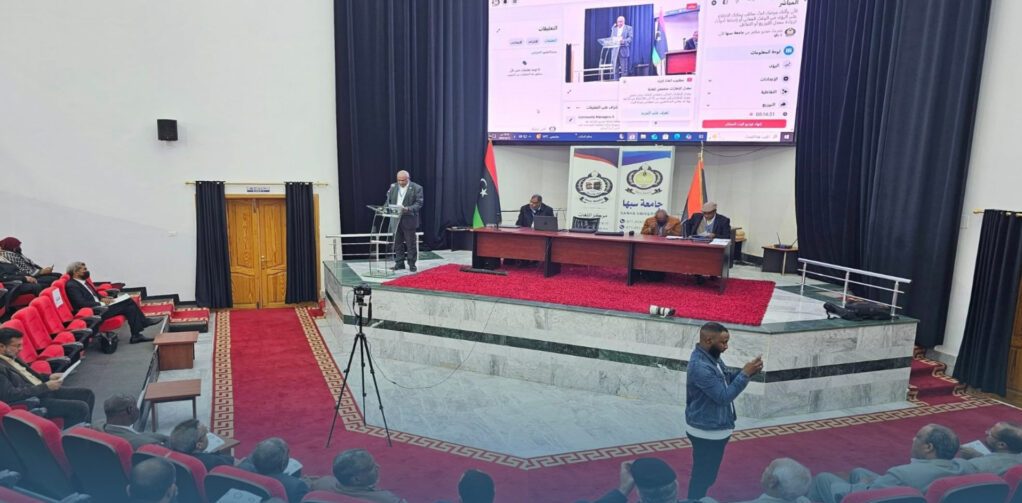
Sabha – The Faculty of Agriculture at Sabha University organized a scientific seminar on Thursday. It was co-organized with the Center for Research and Scientific Consulting. The seminar was titled “Food Security and Food Quality: Challenges in Agriculture and Climate.” Its slogan was “For Safe Food and a Sustainable Environment.”
The event was held at the Al-La’at Center. University President Masoud Mohammed Al-Raqeeq was in attendance. The Dean of the Faculty of Agriculture, Mohammed Miftah Amdakim, was also present. Other participants included faculty deans, researchers, and students. Representatives from the universities of Wadi Al-Shati, Al-Jufra, and Fezzan participated. The Director of Inspection for the Southern Region also attended.
Ecologist Gintz Borghez and rangeland specialist Abdel Moneim Al-Wafi joined via Zoom. Al-Wafi is a faculty member at the College of Veterinary Sciences at the University of Benghazi.
The seminar featured a series of scientific lectures. They covered a wide range of agricultural, animal, and food topics. The lectures focused on food security and public safety.
Discussions covered Libyan pastoral plants and traditional water use. Other topics included afforestation and the threat of genetic pollution to local plants. They also addressed challenges in ensuring slaughterhouse quality. The risks of importing fruits and vegetables were reviewed. Presentations highlighted the role of a balanced diet in disease prevention. Using plant proteins to enhance food products was also discussed. The impact of desertification and climate change on food security was also a key subject.
Lectures addressed public awareness of clean water tanks in the Wadi Utbah region. They also covered the chemical and microbial risks of food contamination. Other subjects included declining palm production and the need to rationalize pesticide use. The impact of resource degradation on genetic sustainability was also examined.
The sessions included many discussions and questions from participants. This allowed for an exchange of expertise. It also raised awareness of sustainable agricultural and food practices.