

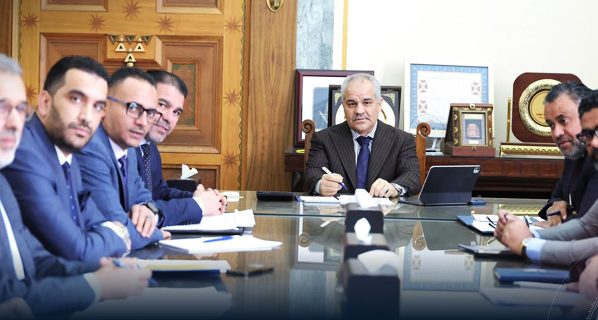
Naji Mohammed Issa, Governor of the Central Bank of Libya, held an extensive meeting on Tuesday. It took place in his office. The meeting included general managers from Al-Jumhouria, Al-Sahara, Al-Wahda, North Africa, and National Commercial Banks. Directors of electronic payment companies were also present. Heads of relevant departments at the Central Bank attended. The purpose was to follow up on digital transformation plans. They also aimed to enhance the spread of electronic payment services. Finally, they reviewed standard growth indicators.
The meeting reviewed key performance indicators. These indicators showed significant progress. They also indicated record growth in electronic transaction volume recently. The number of POS terminals issued increased. This rise occurred in just two months, from January 1 to February 28. The total number reached 170,149 POS terminals.
The meeting’s presentation revealed the number of activated cards. It reached 5,531,507 cards. ATM card operations totaled 4,047,780. Their total transaction volume was 1,891,455,304 dinars during the period. Card operations at points of sale reached 74,169,676. Their total transaction volume amounted to 9,407,482,934 dinars.
The Central Bank clarified the number of banking app service subscribers. It reached 4,294,930 subscribers. Electronic application operations totaled 36,526,767. The value of financial transactions via mobile apps was 50,295,499,266 dinars. The period also saw significant expansion in instant payment services. These included LYPay and OnePay. Their value reached 47,038,334,549.501 dinars.
The Central Bank noted the number of e-wallets. There were 187,335 e-wallets. E-wallet acceptance points numbered 6,096. Operations on e-wallets reached 89,808. The total transaction volume during the period was 8,211,379 dinars.
The Central Bank highlighted growth rates analysis. This included the number of POS devices. It also covered the volume of electronically executed operations. The level of interaction from citizens and the private sector was also analyzed.
Issa concluded by emphasizing procedural facilitation. This is important for citizens and companies to access electronic banking services. He stressed the importance of improving performance periodically. This would meet increasing demand. He praised efforts and initiatives. These contributed to increasing financial inclusion. This was achieved by strengthening the technical infrastructure. The infrastructure supports the electronic payment system.
The attendees agreed to launch the QR payment service. This service will be available at points of sale. It will start next Sunday.