

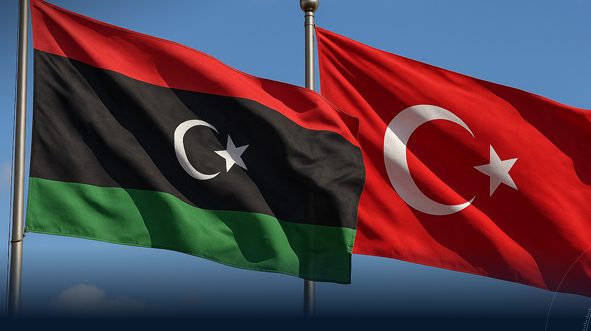
Libya – A Turkish report highlights Ankara’s diplomatic efforts to unify Libyan parties and resume negotiations.
The analysis, published by the English edition of the Turkish newspaper Daily Sabah, asserts that Turkey led intense diplomatic campaigns to unite Libyan factions. Experts quoted in the report stated that Turkey’s strategic security and diplomatic efforts created a conflict-free environment. This led to renewed negotiations between parties in eastern and western Libya after a five-year halt.
Experts indicated that the security balance achieved by Turkey made parties realize prolonged conflict was fruitless. However, concerns remain about a potential new stalemate.
Faisal Kurt, an expert, stated that the 2020 Turkish-Libyan security agreement ensured stability. He believes international interventions negatively impacted the political deadlock. Kurt added that Turkey has taken significant diplomatic steps to foster relations between Tripoli and Benghazi. He emphasized reconciliation between these entities.
Kurt sees direct meetings between parties in Italy as crucial. He also highlighted the importance of an agreement on structuring the election commission. Kurt suggested that ending Libya’s division requires one party to disappear. If that’s not possible, reconciliation is the only option. He noted Turkey’s achievement of this despite difficulties. This, he said, is vital for Libya’s continued political life as a unified nation. Kurt called the meeting to discuss election laws a positive step. He stated the outcome depends on reconciliation through elections and the future governing structure.
Younes Turan, another expert, said Turkey has actively supported Libya since 2011. He noted serious political and security efforts for national unity and territorial integrity. Turan stated Turkey adheres to the slogan “One Libya, One Nation, One Country.” He believes Turkish policy has remained consistent. The Rome meeting of Libyan parties reflects the success of this early policy.
Turan argued that Libya’s progress by 2026 proves Libyan people’s support for Turkish policy. He criticized international media for resisting and promoting division, contrasting it with the current Libyan consensus. He stated recent developments show Turkey as a unifying force in the region.
Burak Yetimoglu, an expert, highlighted Turkey’s significant behind-the-scenes role in the UN-sponsored 4+4 meeting. He said Turkey built communication bridges between eastern and western Libya. This fostered a more stable and strong state within a unified political framework. Yetimoglu stressed the importance of the 4+4 meetings for setting election timelines. He emphasized Turkey’s crucial role in this process.