

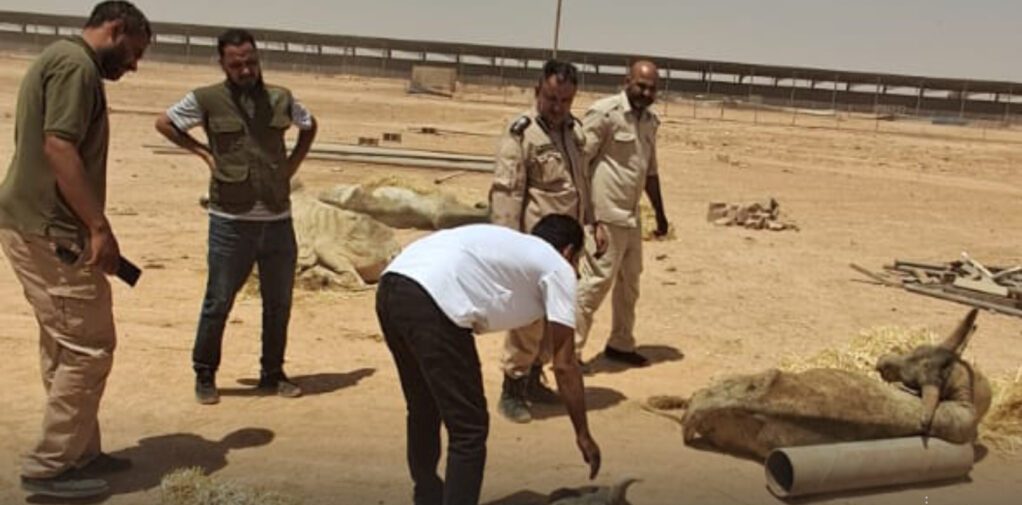
Sulouq – Authorities in Sulouq have declared a field emergency after a new suspected outbreak of foot-and-mouth disease was detected among cattle. Veterinary teams are actively investigating and taking laboratory samples. Livestock markets have been closed, and a large-scale disinfection campaign is underway to contain the spread of the disease.
Colonel Taher Fathi Abdulhamid Al-Shikhi, head of the Agricultural Police branch in Sulouq, said the campaign began following reports from local cattle farmers about infected animals in their barns. One farmer owns around 140 cattle, and another has more than 110, with several other smaller cases also reported.
Al-Shikhi stated that response teams immediately implemented precautionary measures. Livestock markets in Sulouq and Qaminis were shut down, and thorough disinfection was carried out in the markets. The operations involved the agricultural police, animal health department, environmental sanitation teams, and local municipal guards.
He added that the campaign received support from the mayor of Sulouq and the local agriculture sector coordinator, who provided sprayers and disinfectants. This support enabled field teams to begin their work from the early hours of the day.
Veterinary teams reported the death of 15 cattle in one barn today. Veterinarians from the animal health authority have taken samples and sent them to specialized laboratories to determine the exact cause of death.
Faraj Al-Tabbal, agriculture sector coordinator in Sulouq, confirmed that losses among cattle owners continue to rise, with about 60 cattle deaths recorded so far.
Al-Tabbal also noted that authorities do not yet have access to vaccines for foot-and-mouth disease, nor are there medications available to treat it. Current efforts focus on disinfection and limiting the spread of infection.
He explained that vaccination campaigns against foot-and-mouth disease are usually carried out in September and December. However, the disease appeared earlier than usual this year, while the vaccines have not yet arrived.
Al-Tabbal suggested that the outbreak may be linked to cattle entering illegally through border points with Sudan, Niger, and other neighboring African countries. He said smuggling is a major factor contributing to the spread of livestock epidemics in Libya.