

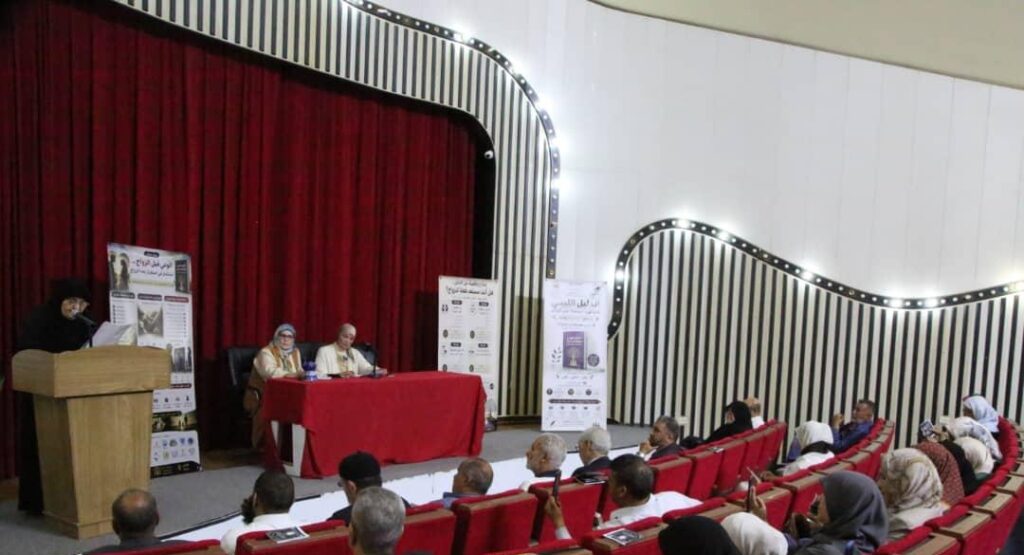
Tripoli – The “National Guide for Premarital Compatibility and Preparedness” was launched in the capital, Tripoli, on Wednesday. This initiative aims to help young people make more conscious decisions before taking this crucial step. It comes amidst rising divorce rates in Libyan society. This is especially true among newlyweds. There are growing calls for preventive solutions. These solutions should enhance family stability. They should also limit family breakdown.
The guide was launched by “Hatha Watani” (This is My Nation) organization. This organization supports and protects juveniles and delinquents. It operates under the slogan ‘Think, Reflect, Decide’. It is a collaboration with ‘Min Haqqi’ (My Right) foundation. This is part of joint efforts to enhance community awareness. It also aims to build more stable families, according to the organizers. The guide aims to solidify the concept of true compatibility between partners before marriage. It also aims to reduce early divorce cases. Furthermore, it seeks to protect children from the effects of family breakdown. This contributes to supporting the stability of the family and society as a whole.
The guide is based on an integrated system. It combines Islamic references and ethical values. It also incorporates legal and human rights dimensions. Additionally, it considers social and humanitarian aspects. These are based on real-life experiences within Libyan society.
Turkiya Mohammed Al-Khuwaildi commented. She is the Head of the Community Participation Department at Central Tripoli Municipality. She also moderated the seminar. She stated the initiative’s launch responds to a noticeable rise in divorce rates. She emphasized that this issue affects every Libyan family. It also impacts every young man and woman contemplating marriage.
Al-Khuwaildi explained in a statement to the Libyan News Agency (LANA). The initiative’s idea emerged after observing a growing social reality. This reality is the increasing divorce rates in recent years. This is despite existing marriage support initiatives. Examples include the Marriage Support Fund. This reflects the need to focus on the quality of choice, not just its facilitation.
She added that the initiative is based on a partnership. It involves several national entities. These include the ‘Min Haqqi’ foundation. It supports and protects delinquent children. Courts and the Civil Registry Department are also partners. This is part of integrated work. It aims to enhance family stability. It also seeks to limit social disintegration.
She noted that the seminar accompanying the initiative highlighted the deep causes of divorce. It also focused on factors that exacerbate marital apathy. This can lead to what is known as ‘silent divorce’.
Al-Khuwaildi affirmed that children are the most affected by divorce. She pointed out that studies indicate a strong link between children’s problems and disintegrated families. The absence of a parent is also a factor. This reinforces the need for preventive initiatives. Such initiatives contribute to building stable and balanced families.
Abdul Hadi Shaqlof, Head of the ‘Min Haqqi’ foundation, also spoke. This foundation supports and protects juvenile delinquents. He emphasized that launching the guide is an important step. It will enhance family and social stability. It will also curb the phenomenon of divorce. Divorce has become a real challenge for Libyan society.
He clarified that the guide aims to educate young people. It highlights the importance of intellectual, social, and psychological compatibility. Marriage is a life project. It requires awareness and prior planning. It is not merely a transient emotional attachment.
Shaqlof informed LANA that the guide includes realistic models. It also contains assessment questions. These help measure both parties’ readiness for marital responsibilities. This contributes to building more cohesive families. Such families are better equipped to face challenges.
He warned about the repercussions of divorce. This is especially true for children. He called for promoting a culture of family awareness. The slogan is: ‘Do not let them pay the price’. This refers to the necessity of protecting children from the effects of separation.
He also urged relevant institutions to adopt this guide. It should serve as a primary reference for those about to marry. This involves distributing it to specialized centers. It also means organizing awareness programs. These programs would explain its contents and how to benefit from it.
Salah Kamash, a consultant at the Islamic Call Society, also commented. He said the guide’s launch represents a qualitative step. It supports family stability in Libya. He pointed out it is among the first national initiatives. It addresses marriage preparedness in a systematic and comprehensive way.
He explained that the guide focuses on educating young people. It covers religious, legal, psychological, and social aspects. This helps build marital relationships. These relationships will be based on sound foundations from the start.
He added that preparing the guide took several months. A group of specialists participated. Its goal is to provide those about to marry with necessary skills and tools. These are for understanding their partners and handling marital challenges.
He noted that rising divorce rates were a key motivator for creating this guide. This is especially true for the early years of marriage. The guide relies on a practical methodology. It goes beyond theoretical approaches. It uses realistic models and assessment questions. These help measure premarital compatibility.
He affirmed that this initiative is an important preventive step. It aims to reduce separations and family conflicts. This contributes to protecting children. It also enhances the stability of Libyan families.
The launch of this guide comes at a time of increasing challenges. These challenges face the institution of marriage in Libya. They include economic pressures and rapid social changes. There is also a lack of awareness regarding marital life requirements.
Divorce rates continue to rise. This is particularly true in the early years of marriage. There is an urgent need to adopt such preventive initiatives. They focus on building premarital awareness. This is preferred over intervening after crises occur. Family stability is no longer solely an individual responsibility. It is a societal issue. It requires concerted efforts. This will ensure a more balanced future for coming generations.