

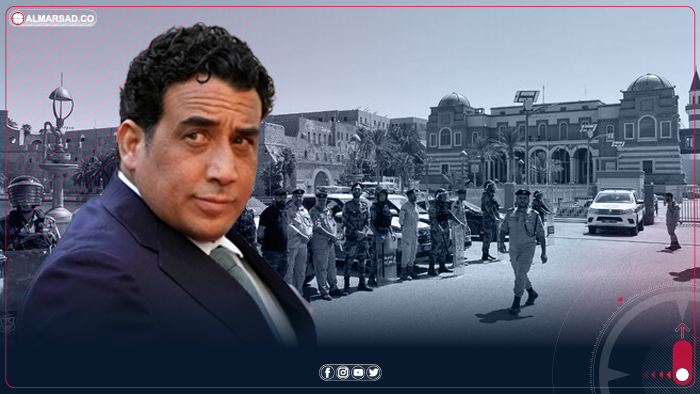
An analytical report by the Australian website “Oz Arab” criticized Presidential Council head Mohamed al-Menfi. The report claims al-Menfi now profits from political work. He reportedly uses a simple political recipe based on frequent talk about patriotism. This tactic aims to make people forget to ask about his actual contributions to the country.
After the fall of Muammar Gaddafi’s regime in 2011, Libyans hoped for a modern state. They wanted a country built on institutions and the rule of law. However, the report states a different reality emerged. A new political class appeared, led by al-Menfi. This class is more skilled at staying in power than building a nation.
Al-Menfi speaks tirelessly about national reconciliation. The phrase appears in almost every speech. The report suggests reconciliation is now used as a permanent slogan. It describes a situation where decisions are absent while words are plentiful. Libyans are led to believe al-Menfi’s compass points only toward this term.
The problem lies in the direction of this compass. It does not lead to genuine national reconciliation. Instead, it leads to a “reconciliation of interests.” This policy prioritizes balance over truth. It favors compliments over the state and deals over principles.
The report highlights a lack of transparency in the political scene. Al-Menfi speaks of transparency while political decisions remain mysterious. He declares his commitment to patriotism. Meanwhile, politics appears to be an open market for personal gains. This paradox intensifies as reality moves further away from these slogans.
A true statesman has one compass: the interest of the state. The report claims some politicians in Libya discovered more flexible compasses. These point toward personal calculations or the lure of the dollar. This is where interests meet and deals are finalized.
The current approach leads to prolonging the crisis rather than building the state. Building a state requires clear decisions and frank positions. Managing balances only produces more stagnation. Politicians flourish in this stagnation. They have learned how to manage the crisis without solving it.
The Libyan political scene has become like a theater. The same scenes of speeches about the nation and transparency repeat. Nothing actually happens. The state has turned into a project permanently postponed until the next speech.
History is written by decisions, not speeches. Nations are built by those who take responsibility for power. There is a fundamental difference between a politician and a statesman. A politician manages balances to remain in office. A statesman makes necessary decisions for his country, even at a personal cost.
Leadership is measured by progress during a period of rule. If eloquence were the only standard, al-Menfi would be a successful leader. However, the true standard is state-building. This makes the picture much more complicated.
A new generation is emerging within Libyan society. This generation differs from the elites of the previous stage. These young patriots see politics as a historical responsibility, not a means of influence. They realize the state cannot be built with a mindset of political favors. True reconciliation means establishing a fair state for everyone.
This generation seeks actions rather than new speeches on patriotism. They want clear policies that allow the public to hold officials accountable. Al-Menfi faces a harsh question today. It is not about what he says, but where the country has gone under his leadership. Libya does not need a new compass for words, but a true compass leading to the state.