

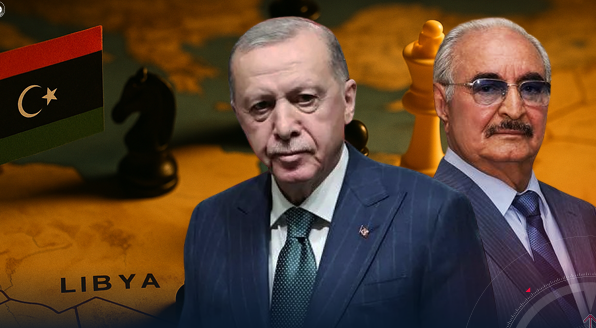
Istanbul – Bakir Atajan, a Middle East affairs expert, said the Libyan crisis has harmed all parties, especially Turkey and Egypt. He emphasized that Egypt’s role cannot be overlooked, given Cairo’s significant influence in eastern Libya.
Atajan spoke on the “Dialogue Tonight” program on Libya Al-Ahrar TV, which broadcasts from Turkey. He said Turkish Foreign Minister Hakan Fidan’s recent visits to Tripoli, Benghazi, and Cairo, and his meeting with Egypt’s intelligence chief, show Ankara’s efforts to reach understandings that consider the interests of regional and international stakeholders in Libya.
Atajan believes these talks could lay the groundwork for rebuilding and unifying Libya’s institutions. He noted the ultimate goal is a single unified army, central bank, and political and executive authorities.
He pointed out that in his view, Turkey’s support for western Libya over the past seven years has not delivered tangible results. He said real progress requires dialogue with eastern Libyan leaders, especially Speaker of Parliament Aguila Saleh.
Atajan added that any Turkish presence in Libya lacking political and economic legitimacy or shared interests could become a burden over time and limit Ankara’s ability to act.
He stressed that Turkey, Egypt, and Libyans must recognize that a solution requires direct dialogue and new approaches to managing the crisis, instead of relying on previous methods.
Atajan explained that Turkey is not seeking traditional mediation, but rather what he called “building internal and external balance.” He described this as a diplomatic strategy to address military, political, and economic disputes between east and west and between rival cities within Libya.
He claimed this approach has been well received by Field Marshal Khalifa Haftar, who he said is willing to visit Ankara soon. Atajan also said that achieving external balance between Turkey and Egypt is essential to reaching internal stability in Libya.
He added that all parties are realizing that the use of force has not brought real gains, but has made the crisis worse.
Commenting on the U.S. initiative, Atajan said that his concept of “managing balance” differs from the American approach, which he said faces objections from several sides. He called for Turkey and Egypt to present a joint initiative to bring together Libyan and regional stakeholders.
Atajan emphasized that offering a balanced vision does not mean confronting or actively opposing the U.S. plan. Instead, he described it as an attempt to introduce a new method for handling the Libyan issue, both domestically and internationally.