

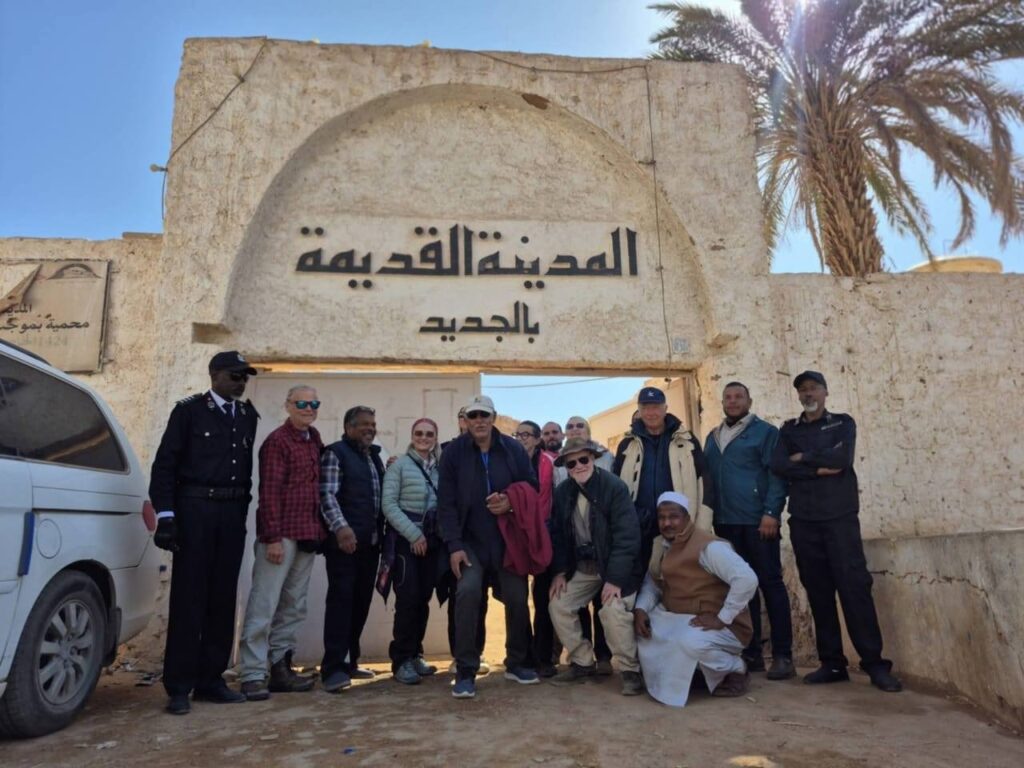
Sabha – Security stability in southern Libya is crucial. It allows for the gradual return of tourism. This stability directly indicates improved general conditions. Tourism thrives only in a safe and stable environment. Its return stimulates the local economy. Key related sectors are activated. These include hotels, accommodation, and transport. Tourism services also benefit. Traditional industries and handicrafts are boosted. These provide important income for local communities. They create jobs. They enhance social stability.
In this context, Yosri Abdul Hafeez spoke. He is the Director of the Media and Public Relations Office at the Ministry of Tourism. He told the Libyan News Agency about an Italian tourist group. The group is on a tour of southern Libya. They are visiting several cities. They are also seeing archaeological and natural sites. The tour is part of an organized program. It is coordinated with relevant authorities.
Abdul Hafeez further stated that the tour program includes field visits. They will visit various areas and cities. These include Daraj, Al-Qaryat, Al-Shuwairif, Brak. They will also visit Sabha, Murzuq, Tajerhi, Ubari, Germa, Traghen, and the Lakes. Wadi Matendjhou is also on the itinerary. They will see several heritage and historical sites.
During their tour, the delegation observed archaeological landmarks in Murzuq. They also saw traditional urban structures. They visited the Ubari and Germa areas. The desert lakes were also part of their visit. These are prominent natural tourist destinations in southern Libya. They boast unique environmental and aesthetic diversity.
Abdul Hafeez confirmed the tourists expressed satisfaction with the security situation. They admired the desert nature. They were also impressed by the cultural diversity of the southern cities. He noted the tour is progressing as planned.
He also pointed out that the Ministry of Tourism oversees these programs. It coordinates with the Ministry of Interior. They also work with the Tourist and Antiquities Police Department. This ensures the safety and security of tourist groups. It reflects the security readiness in the targeted areas.
The continuation of such tours reflects growing foreign tourist confidence. This confidence is in Libyan tourist destinations. It also confirms tourism can be a real driver for security and stability. It enhances the state’s presence. It supports the local economy. It involves local communities in protecting natural and heritage resources.
In this framework, there is an urgent need to give more attention to the tourism sector. More planning is also needed. Libya boasts immense and diverse tourism potential. This includes unique desert tourism. It also has extensive Mediterranean coastal tourism. Mountain tourism is available in Al-Jabal Al-Akhdar and Western regions. Furthermore, there is an ancient cultural and human heritage. This heritage spans thousands of years. Investing in this sector is a strategic option. It can diversify Libya’s income sources. It can support sustainable development. It can strengthen stability across the country.