

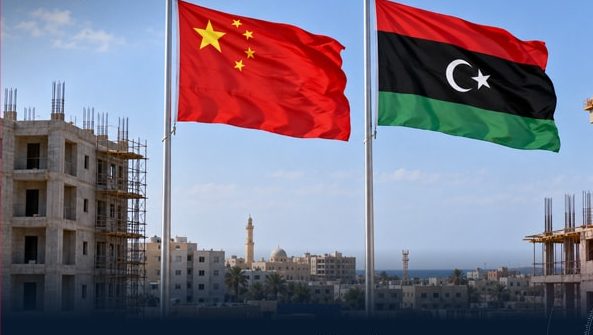
An analytical report published by Italy’s English-language news site Decode 39 highlights China’s quiet rebuilding of its presence in Libya after more than a decade of neglect.
The report explains that Beijing is using several channels—diplomatic, financial, and commercial—instead of relying on a single visible initiative. This strategy aims to establish an effective relationship following years when Chinese involvement remained largely symbolic.
The report notes a revival of diplomatic activity, especially since China reopened its embassy in Tripoli in November 2025, after it had been closed since 2014. Since then, Chinese Ambassador Ma Xueyong has met several times with Libya’s Prime Minister Abdul Hamid Dbeibah and Foreign Minister Al-Taher Al-Baour. These unusually systematic meetings for a recently reopened embassy have focused on infrastructure, reconstruction, energy, health, and education. The discussions also explored direct participation of Chinese private companies in Libya’s development programs.
The report also mentions contacts with Libya’s Ministry of Interior about cooperation in training and security, describing this as particularly notable. It points out that having a resident ambassador ready to hold so many meetings in Tripoli—considered by Beijing too dangerous for its staff for a decade—is a significant shift. This suggests that Chinese officials now see a more organized presence in Libya as realistic, not just desirable.
Financial ties have grown alongside the diplomatic efforts. The People’s Bank of China and Libya’s central bank agreed to connect commercial banks to China’s payment system. While this move does not reduce the dominance of the dollar in Libyan trade or threaten Libyan reserves, it marks a clear expansion of infrastructure that allows Libyan importers to bypass intermediary banks. The report describes this as a subtler—yet perhaps more sustainable—form of influence than establishing a port or military base.
Commercial cooperation also appears to be deepening. The Chinese Petroleum Chamber of Commerce has begun talks with Libya’s General Union of Chambers about working together in oil, gas, and renewable energy. The report calls this another form of diplomacy, aimed at securing access and financing to lower transaction costs, while creating commercial links through sector-specific communication.
However, the report questions the extent of the political weight behind this structural shift, noting that Beijing remains reluctant to transform commercial access into political commitment. It concludes by pointing to China’s ongoing refusal to help Tripoli unfreeze sovereign assets as evidence of this caution.