

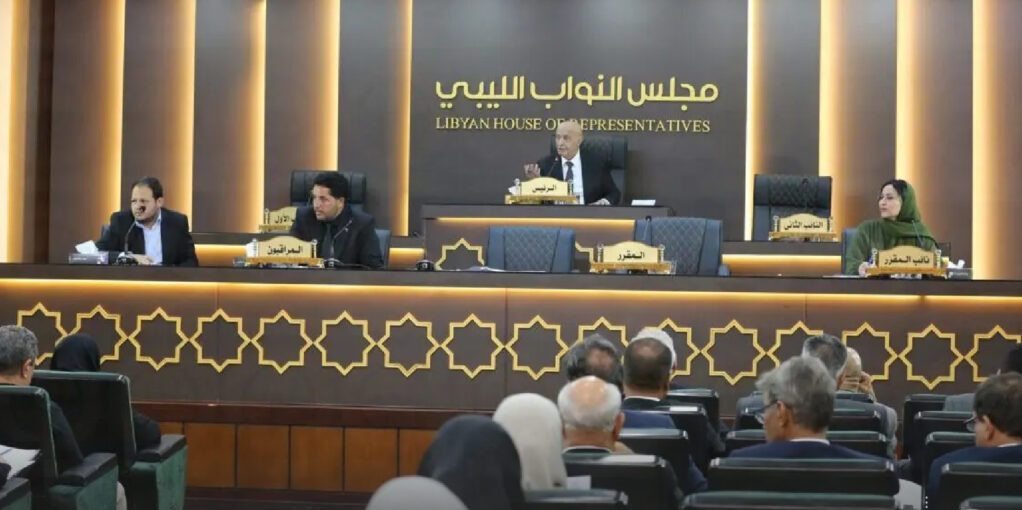
Benghazi – The House of Representatives has taken legislative and regulatory steps to implement the agreement reached at the mini-meeting in Tripoli on August 30. This agreement concerns reforming the High National Elections Commission and amending the legal frameworks for presidential and parliamentary elections. The one-month deadline for both the House of Representatives and the High Council of State to ratify the deal is approaching, but the High Council of State has yet to announce a vote on the agreement.
The meeting, which was facilitated by the United Nations Support Mission in Libya, set out a process for national approval by both the House and the High Council within a month, along with a mechanism to monitor its implementation. The UN mission reaffirmed these points when announcing the agreement’s signing on August 30.
On September 14, the House of Representatives approved the agreement unanimously at a session in Benghazi. Lawmakers also voted to adopt the outcomes of the mini-meeting regarding restructuring the High National Elections Commission. The UN mission welcomed this decision as an important step toward moving the electoral process forward.
Following its endorsement, the House issued Decision No. 07 of 2026, adopting the agreement, and Decision No. 08 concerning the reformation of the elections commission. The House also passed amendments to the laws governing presidential and parliamentary elections. These steps signal a transition from approving the agreement to taking practical measures to implement several of its provisions.
Key procedures approved by the House are in line with the August 30 agreement. These include restructuring the elections commission, holding presidential and parliamentary polls under a unified executive authority within 24 months, and addressing several disputes over election law.
Meanwhile, as of Sunday, the High Council of State still had not announced a vote on the agreement. The council had previously stated, before the agreement was signed, that it was not officially represented in the “4+4” group and maintained that setting the legal framework for elections and reshaping the elections commission falls within the joint authority of both chambers. The council’s political committee discussed the outcomes and legal implications of the meeting on August 31 and examined how they align with national standards.
In a statement on September 28, the High Council of State stressed that presidential and parliamentary elections are a national obligation. However, it emphasized the need to fully complete the institutional and consensus-based framework for election laws, noting that political understandings should not become definitive legal rules before these frameworks are ready.
The council’s stance comes just two days before the one-month deadline for ratification. The House of Representatives had already approved the agreement around the halfway point of the timeline and has begun taking steps to implement it.
This situation highlights two main issues between the two bodies: whether the institutional requirements for ratifying the agreement have been met, and what procedures must be followed if they fail to reach consensus within the set timeframe. The agreement itself contains provisions for such cases and does not allow for automatic approval by either body if the deadline expires.
On September 20, members of the mini-meeting held their first follow-up session in Tunis since the agreement was signed. They reviewed the public positions on the deal, including support from the House of Representatives, and agreed to continue communicating with local parties to broaden support. The next follow-up meeting is scheduled for early October.
As a result, the dispute over the August 30 agreement has shifted from differences on election arrangements—some of which the House has already implemented—to completing the mechanism for ratifying the agreement and clarifying which steps each body may take before the institutional process is finalized.