

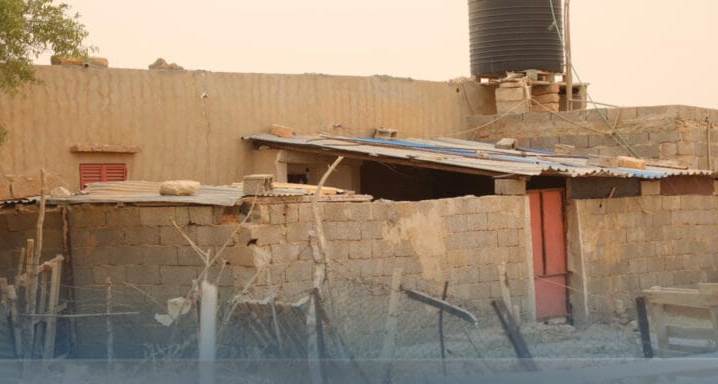
Msus – The Libyan News Newspaper published a report highlighting the dire living conditions faced by the residents of Msus. Located south of the town of Soluq and approximately 130 kilometers from Benghazi, the village suffers from harsh natural conditions and a near-total absence of infrastructure, sparking repeated demands for its inclusion in national reconstruction and development plans.
The village residents appealed to the General Command of the Libyan National Army, the Speaker of the House of Representatives, the Head of the Libya Development and Reconstruction Fund, and the Prime Minister of the Libyan Government to address the deplorable state of their village, which has further deteriorated following a recent sandstorm.
A Voice from the Heart of Suffering
Khaled Al-Awami, a young resident of Msus, issued a plea on behalf of the community. He stated that the residents deeply value the immense sacrifices made by the General Command for Libya’s security, unity, and stability, emphasizing that Msus has never been detached from the nation’s concerns or the suffering of its people.
“We believe that those who protected the nation from division cannot accept that any part of it remains neglected and deprived,” Al-Awami said. “It is with this faith that we raise our sincere appeal.”
Fragile Services and Harsh Realities
Al-Awami explained that the powerful storm that hit the Msus region over the past two days exposed the extreme fragility of public services, which were already nearly non-existent. The storm highlighted the scale of daily suffering, including prolonged power outages, acute water shortages, and the near-total paralysis of daily life due to high winds.
He pointed out that the road connecting Msus and Soluq—intended to be a vital lifeline—has become eroded and hazardous for commuters. Furthermore, he noted the weakness of telecommunication networks, which were failing even before the storm intensified.
Deplorable Housing and Health Conditions
The report detailed that the majority of residents live in dwellings constructed from corrugated zinc and rusted metal sheets. These structures offer no protection against the scorching summer heat or the freezing winter cold, lacking the most basic safety standards.
Regarding healthcare, Al-Awami noted that the rural hospital in Msus has long suffered from a severe shortage of medical supplies and equipment, compounded by a significant deficit in medical staff. Despite repeated requests from the hospital administration, these pleas have yet to receive a response.
A Call for Justice and Equality
Al-Awami stated that as the people of Msus observe the national map, they see reconstruction projects moving forward in many regions—a progress they appreciate. However, they feel their village is still waiting for its turn and for a fair “gesture of attention” to restore their forgotten rights. He emphasized that Libya’s progress should be measured by equal rights for all citizens, regardless of their geographical location.
He stressed that the residents do not doubt the leadership’s sense of justice but ask with “pain mixed with hope”: When will their right to development and reconstruction be realized? When will their long-standing suffering finally end?
The residents have placed this appeal before the relevant authorities, trusting that this phase of Libya’s development requires “humanity to be the companion of every decision” and that no region should be left to face its struggles alone.
The people of Msus called on the Libya Development and Reconstruction Fund to conduct an urgent field visit to witness the extent of the deterioration in water, health, and education services, and to address stalled housing projects in an area where homes fail to provide even basic shelter from the elements.