

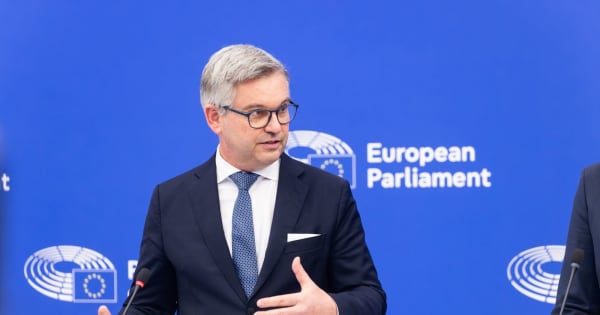
Brussels – European Commissioner for Home Affairs and Migration, Magnus Brunner, announced on Saturday that the European Union plans to increasingly adopt a “carrot and stick” approach. This strategy will apply to its dealings with third-world countries regarding ongoing migration. The approach combines pressure with offering assistance.
Brunner, in an interview with the German Press Agency (dpa) on Saturday, added that the EU possesses multiple tools. These include visa policy, trade, and development cooperation. He emphasized the necessity of using these as strategic means to serve Europe’s interests.
The European Commissioner noted disagreements with certain countries. He stated they had not made sufficient efforts previously to address irregular migration. Brunner explained, “We imposed visa-related sanctions on just one country. Suddenly, it worked.” Brunner, an Austrian national, described this approach as “migration diplomacy.”
He clarified that many countries seek to facilitate visa procedures with the EU. They anticipate tangible economic benefits. The EU can leverage this to its advantage, Brunner noted. European migration policy aims not only to curb irregular migration. It also seeks to provide opportunities.
Brunner stated, “We must become more flexible, faster, and reliant on digitalization.” This is especially true regarding attracting skilled labor and scientists. According to the migration strategy unveiled by the European Commission this week, labor shortages in many key sectors are likely to worsen over the next five years.
Brunner sees an opportunity in this challenge. However, he emphasized the bloc’s clear priorities. He stated, “If we give our citizens the feeling that we control irregular migration, we can then better discuss legal migration.” He confirmed that the EU had not controlled this issue over the past decade. This was due to outdated rules. Brunner added, “We must decide for ourselves who comes to Europe, not human smugglers.”
To improve the situation of migrants within the EU, Brunner intends to deter asylum seekers from using dangerous routes. These routes often cross the Mediterranean Sea. He also plans to expand cooperation with third-world countries. The migration strategy includes establishing special centers along migration routes. These are known as “multi-purpose centers.” This was outlined in a strategy paper presented this week.
According to the European Commission, these centers can facilitate evacuation operations. They can provide shelter for those in need. They can also support voluntary return programs to their home countries.
The new five-year European migration strategy sets three main goals. First, it aims to prevent irregular migration and dismantle criminal smuggling networks. Second, it seeks to protect people fleeing wars and persecution, while preventing asylum system abuse. Third, it aims to attract skilled individuals to enhance the competitiveness of European economies.