

Ulrika Richardson, the Deputy Special Representative of the Secretary-General and UN Resident Coordinator in Libya, began a two-day mission to southern Libya. She was accompanied by representatives from the International Organization for Migration, the UN High Commissioner for Human Rights, the UN Development Programme, UNICEF, and the UN Mission.
The UN Mission’s media office stated the mission’s goal. It aimed to engage with local authorities, communities, and partners. Discussions focused on key priorities in the Fezzan region.
In Sebha, Richardson met with Major General Ahmed Salem. Salem commands the Southern Military Region. Their discussions highlighted the importance of maintaining UN access and engagement across the south.
Richardson acknowledged the authorities’ ongoing efforts to improve regional stability. She called for continued action against illicit activities. These activities include smuggling, human trafficking, and trans-border criminal networks. Such networks affect southern Libya.
Richardson and her delegation also held a joint meeting with several municipal mayors. Mayors from Sebha, Ubari, Ghat, Brak, Al-Buwanis, Bent Baya, and Al-Jufra attended. They discussed local priorities and service delivery challenges in southern Libya. Specific concerns included climate risks, water access, and healthcare services.
The discussions emphasized the need for more coordinated development support. They also stressed strengthening municipal capacities. Expanding municipality-led cooperation in Fezzan is crucial. This will address common challenges and improve living conditions for local communities.
The delegation visited the Libyan Red Crescent warehouse. They observed ongoing UN support for Sudanese refugees. UNICEF and UNHCR contribute to this aid. They provide food assistance and distribute humanitarian relief items to the most vulnerable refugee families.
The delegation also visited the UNESCO library, supported by the UN Development Programme. Historical UN documents dating back to 1950 were on display. These documents reflect the long-standing partnership between the UN and Libya. They highlight the UN’s role in supporting Libya’s path to independence. This followed the 1949 UN General Assembly resolution.
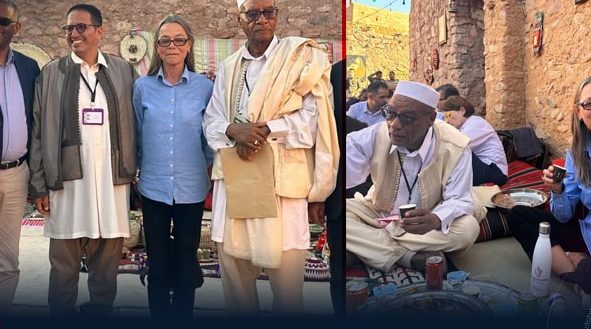
The delegation concluded its visit in Sebha’s Old City. Elders, dignitaries, and local community members welcomed them. The welcome included women, youth, and representatives from Libya’s diverse cultural components.
The visit highlighted the beauty and richness of Libya’s history. It emphasized the importance of preserving Fezzan’s cultural heritage. Investing in it for future generations is crucial. This heritage can inspire unity and cohesion. The UN reiterated its commitment to supporting practical and coordinated efforts. These efforts will be guided by local priorities and respond to community needs across southern Libya.