


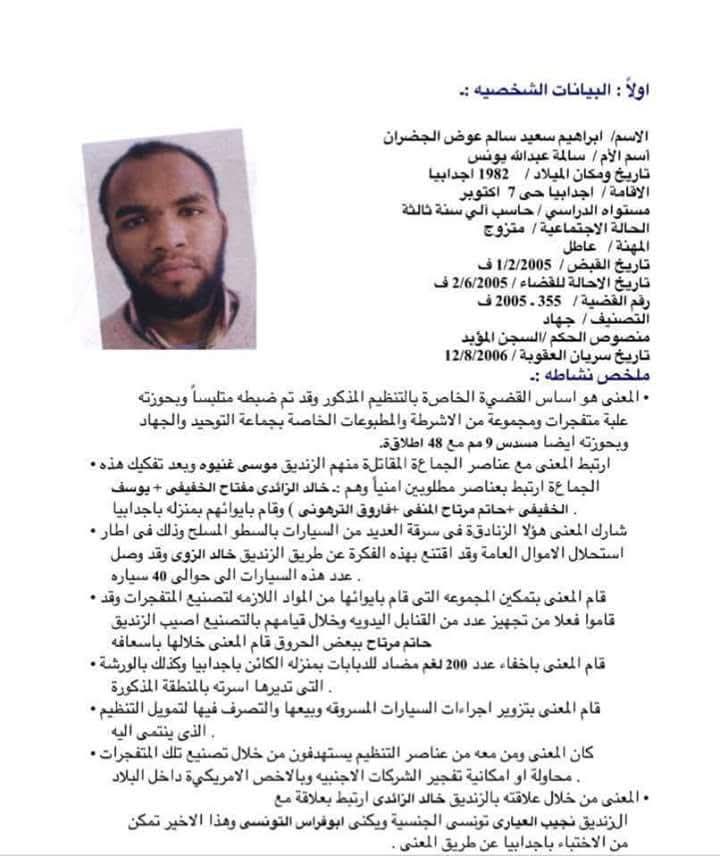
The capital, Tripoli, and the Misrata region have witnessed rapid security developments. Informed sources have confirmed that the “Al-Radaa Force for Combating Terrorism and Organized Crime” has released a group of individuals classified as members of extremist organizations. These individuals had been held within the Al-Radaa Force prison under strict security surveillance for many years. The list of released detainees includes figures historically linked to combat activities and recruitment for Al-Qaeda, most notably Ahmed Al-Abbar and Ali Zoubi from Benghazi, and Tariq Al-Sharkasi from Derna, in addition to former leading elements involved in complex security cases.
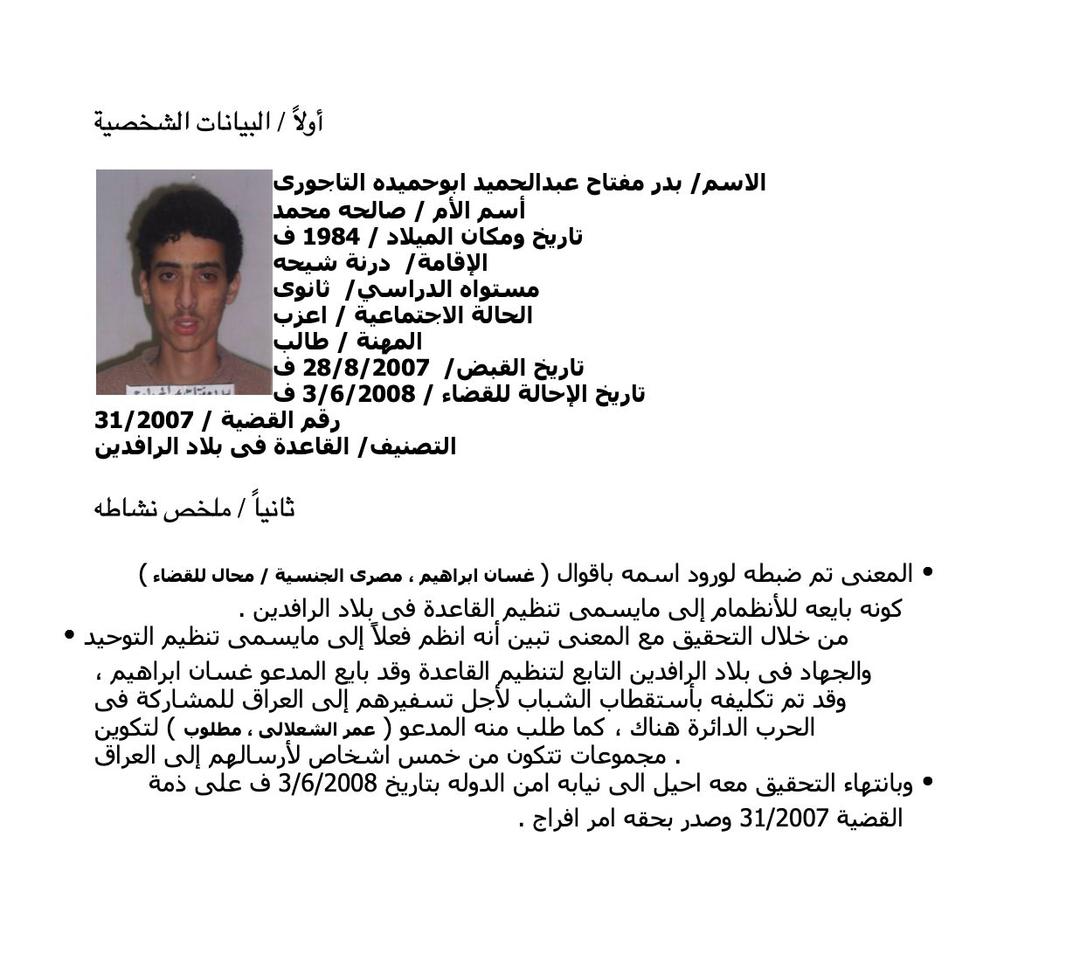
Security records for the released individuals reveal backgrounds described as dangerous. This includes Badr Muftah Al-Tajouri, who was arrested in 2008 on charges of pledging allegiance to “Al-Qaeda in Iraq” and recruiting youth to fight there. It also includes Akram Saleh Al-Tarkawi, whose name is linked to harboring international terrorist leaders in Derna, most notably the Egyptian Hisham Ashmawi and the Algerian Mokhtar Belmokhtar. Observers believe the timing of these releases from the Al-Radaa prison raises significant concerns, as it suggests the existence of understandings aimed at utilizing these extremist cadres for upcoming military assignments.
In a related field context, reports have surfaced regarding intensive militant mobilizations across the western region and the Misrata area, where the released individuals were spotted joining a camp led by Ismail Al-Sallabi and Ibrahim Jadhran. This mobilization coincided with Jadhran’s arrival in Misrata to hold meetings with Abdelsalam Zoubi, the Undersecretary of the Ministry of Defense for the Government of National Unity, and the commander Ismail Al-Sallabi. These meetings come amidst reports of military arrangements aimed at repositioning these forces in the vicinity of Zliten and Misrata.
Leaked information indicates that these movements are part of preparations to launch a military offensive targeting the Oil Crescent region and the South, both of which are under the control of the General Command of the Libyan National Army (LNA). These escalatory steps follow Ismail Al-Sallabi’s takeover of a strategic camp south of Zliten, reinforcing hypotheses of a plot to destabilize the oil-rich and southern regions through an alliance of extremist elements and armed commanders. Such a move threatens to plunge the country into a new military confrontation, jeopardizing peace and security throughout Libya.