

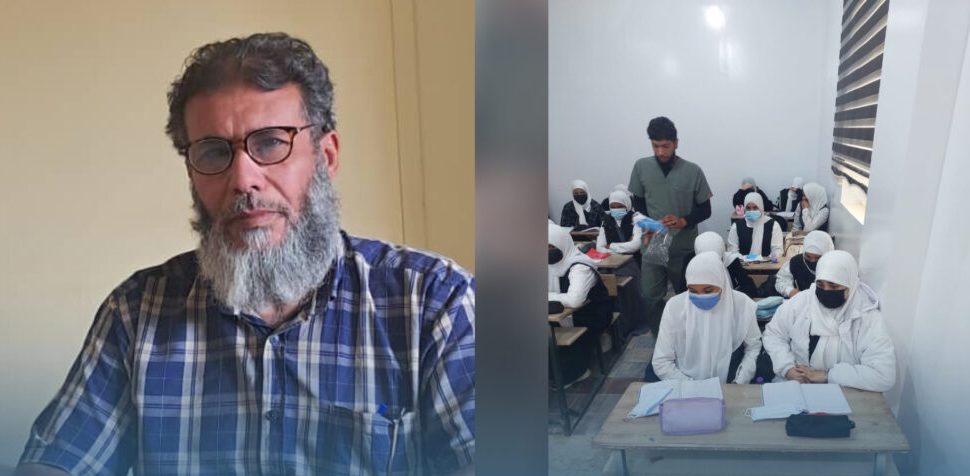
Suluq – The Education Monitoring Office in Suluq held an emergency meeting today, Sunday, with relevant health authorities following a significant increase in influenza cases in a number of the region’s schools over the past few days. This has sparked a wave of concern among parents, educational staff, and school health officials. The meeting was part of an effort to raise the level of preparedness and take immediate measures to curb the spread of the infection and protect students and teachers from a worsening of the current health situation.
According to medical reports presented during the meeting, healthcare centers and Suluq Rural Hospital have recorded a noticeable increase in the number of influenza cases, which prompted a study of the reasons for the rapid spread and the determination of necessary measures to combat it within educational institutions. The information presented indicated a significant rise in reported cases in recent days, leading health authorities to warn of the possibility of the infection’s circle widening if strict preventive measures are not implemented in schools.
The meeting stressed the need to intensify preventive work within educational institutions by enhancing health awareness among students and teachers, monitoring suspected cases daily, and implementing continuous cleaning and sterilization plans in classrooms, corridors, and sanitary facilities. The attendees also recommended raising the level of coordination between health and education administrations and notifying the relevant authorities of any new developments that could pose a direct threat to the safety of the school community.
In a related context, the Director of Medical Affairs at Suluq Rural Hospital, Abdulsalam Busha’araya, announced the registration of 150 influenza cases since Friday. He confirmed that the number of cases is increasing daily by 20 to 50, a situation that requires exceptional decisions to curb the rapid spread within schools. Busha’araya explained that most of the registered cases are among students, noting that overcrowding in classrooms is a primary factor in the virus’s spread, especially with poor physical distancing and the difficulty of ideally managing the school environment.
The Director of Medical Affairs noted that Suluq Hospital participated in a broad meeting that included the Education Monitoring Office, the Director of the city’s Education Office, the Municipal Guard, and a number of health services officials. The meeting concluded with an official recommendation to suspend classes for a full week—specifically the period covering the virus’s incubation—in an attempt to limit the transmission of the infection, give students a chance to recover, and reduce the pressure on the region’s health system.
In a practical step aimed at raising the level of prevention, Busha’araya confirmed that the hospital administration has completed the distribution of medical masks to all schools for both morning and evening sessions, while continuing awareness campaigns on how to handle symptoms and ways to limit the spread. He also called on parents to monitor their children for symptoms and to seek medical consultation promptly if signs of the illness appear.
He added that the hospital’s emergency department is operating at full capacity to receive cases, noting that many of the infected required nebulizer sessions and oxygen therapy in addition to fever reducers, amid increasing pressure on health services. Busha’araya concluded his statement by affirming that efforts are ongoing in coordination with the relevant authorities to control the situation.