

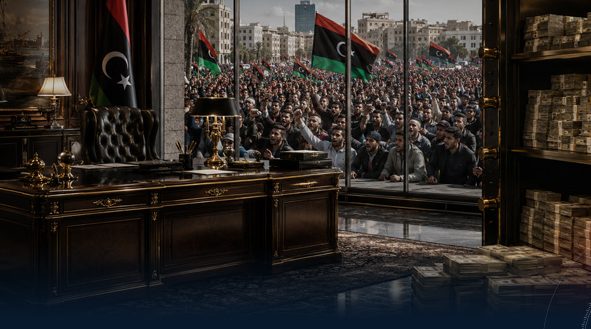
A recent report by the London-based Asharq Al-Awsat newspaper highlights growing calls among Libyan political, academic, and activist circles for a large-scale anti-corruption campaign, inspired by recent efforts in Iraq. This comes as Libya continues to struggle with political and institutional division and stalled accountability efforts.
The report notes that Libya is widely ranked among the countries most affected by corruption. The Iraqi campaign has sparked debate among Libyans about whether a similar initiative could be launched locally. According to the report, many see Iraq’s experience as a model worth following. Discussions have moved from social media to include politicians, academics, and activists, many of whom view such a campaign as a chance to reopen dialogue about Libya’s anti-corruption future.
Fathi Shibli, head of the Sawt Al-Shaab Party, criticized members of the House of Representatives who have remained in office for more than twelve years. He accused some of acting as though they are above the law and beyond accountability.
Political activist Mabrouk Al-Sweih said Libya’s own anti-corruption efforts faltered despite drawing inspiration from Iraq when the National Anti-Corruption Authority was established in 2014. He attributed this setback to ongoing political divisions. Hashim Belkheir, an expert in health system reform, believes launching a similar campaign in Libya remains possible. Blogger Abdelqader Al-Farsi called for the campaign to be expedited, asking when it would begin. Political analyst Mohamed Al-Amin summarized the debate by saying, “The mirror is Iraqi, but the pain is Libyan.”
Abd Al-Rahim Al-Shaibani, a member of the economic track in Libya’s structured dialogue, said that United Nations-sponsored talks included important recommendations for strengthening oversight agencies and combating corruption. However, he argued that genuine progress depends on political will. Al-Shaibani sees ending political division as key to restructuring the economy and rebuilding stable state institutions.
He emphasized that fighting corruption requires new legislation to allow authorities to prosecute offenders through fair legal procedures that protect the right to defense. He also called for developing oversight systems according to international standards, training specialized staff, strengthening judicial independence, and activating the oversight role of the House of Representatives.
Al-Shaibani added that key steps include promoting transparency and good governance of public finances, cooperating with international organizations—especially Transparency International—and creating reliable databases to measure integrity and monitor institutions’ compliance with transparency and financial disclosure standards.
Economist Khaled Al-Zantouni said corruption is not limited to Iraq or Libya, but also exists in developed and Arab countries. The difference, he noted, lies in each country’s ability to fight it and how clearly the problem is defined. Al-Zantouni warned that some practices, including taking commissions on government contracts, misusing letters of credit, and activities tied to the parallel market—including money laundering—are increasingly being excused, even though he described them as clear crimes.
He praised efforts by the Office of the Attorney General, particularly recent investigations into fuel smuggling that resulted in charges against several suspects. Yet, he cautioned that the road ahead remains long and complicated due to Libya’s political, security, and social challenges.
Al-Zantouni stressed the need to support and empower the judiciary, and for the legislative and executive branches to work closely with the Attorney General and other relevant agencies. He said this cooperation is needed to ensure these bodies can operate fairly and independently, without granting immunity or protection to any official, regardless of their position.