

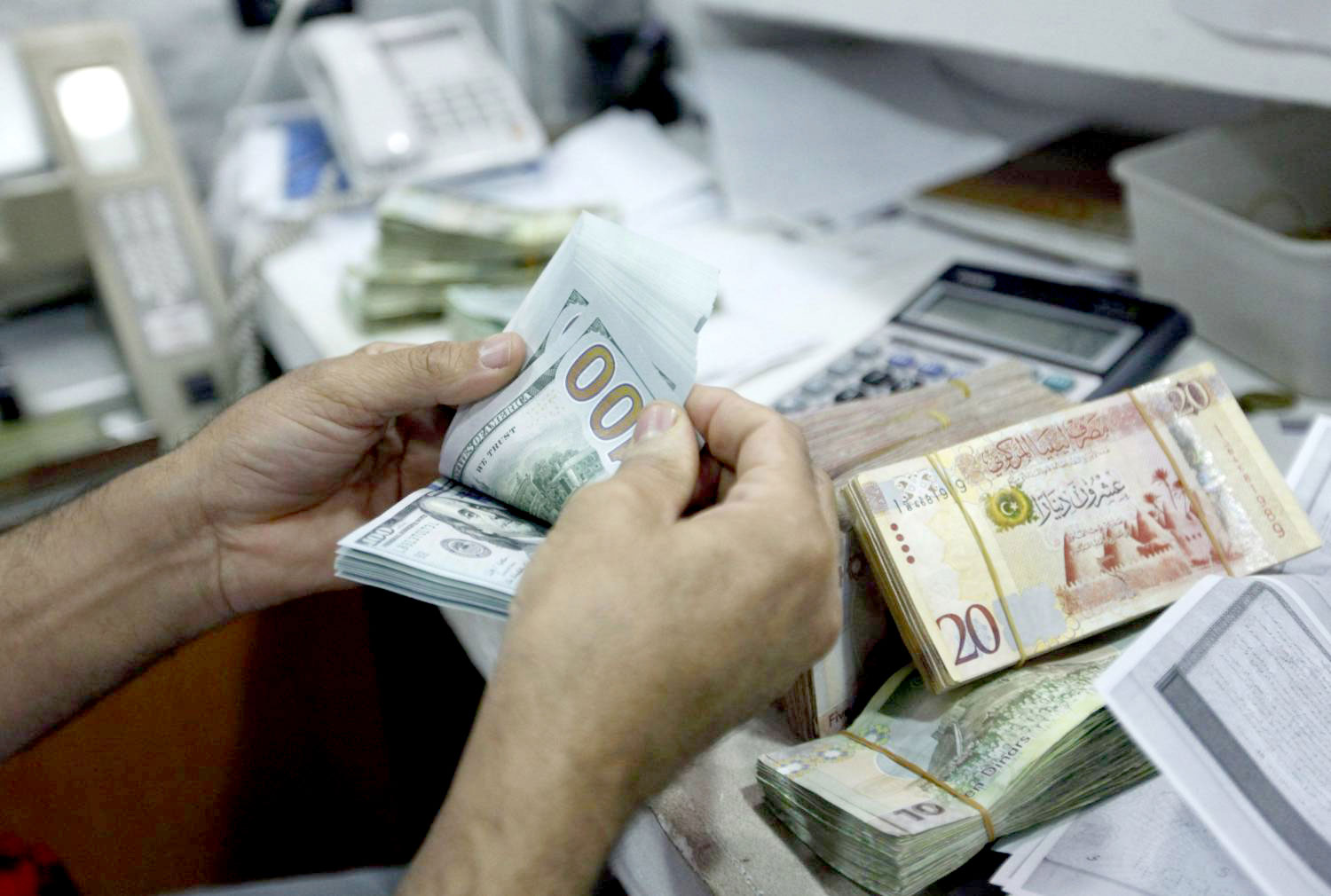
Libya – Former Central Bank of Libya board member Marajea Ghaith warned that money laundering has become one of the hidden ways to achieve quick wealth in Libya. He said the chaos that has gripped the country has created a favorable environment for these practices to spread.
Speaking to Asharq Al-Awsat newspaper, Ghaith explained that the rise in money laundering is linked to increased demand for US dollars and the growth of illegal drug, weapons, and human smuggling trades.
Ghaith noted that this phenomenon has grown significantly since Libya’s political and military split in 2014. He said money laundering was not as widespread during his tenure at the Central Bank.
Ghaith stressed the need for stricter monitoring of financial flows. He called for linking the amount of money entering bank accounts to the nature of customers’ activities and their declared incomes. As an example, he described a public employee with a monthly salary of 2,000 dinars who suddenly receives a deposit of 5 million dinars. He said such cases require investigation into the source of funds and the manner in which they were deposited.
Ghaith insisted that financial oversight should not be limited to the size of the transactions. It should also verify the relationship between the sender and recipient, the origin of the funds, and the purpose of the transfer.
He pointed out that some Arab and Western countries enforce stricter rules on tracking financial transfers and verifying their sources. He argued that tightening these controls is essential to combating money laundering and related crimes.
In a similar vein, Abdel Baset Haroun, director of the Center for Strategic Research and Studies, described corruption in Libya—including money laundering crimes—as “a devastating war against Libyan citizens.” He urged countries that receive such funds to enforce tough measures to pursue and hold accountable Libyan figures involved in these practices.
Haroun told Asharq Al-Awsat that the danger of money laundering goes beyond hiding the origin of money. He said these funds are recycled through apparently legitimate businesses, allowing suspected illegal gains to be turned into assets whose sources are hard to trace.