

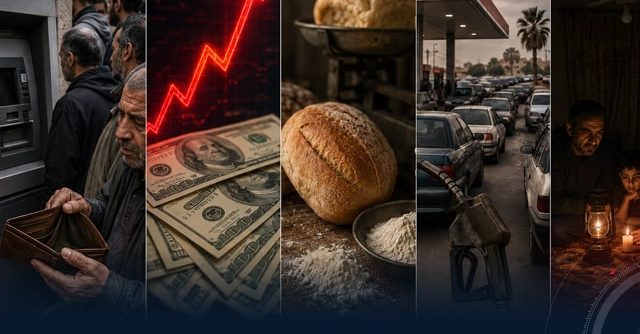
Libya – Salama Al-Ghuwail, the former Minister of State for Economic Affairs and current head of the Competition and Anti-Monopoly Council, said that the rise in bread prices in Libya is not just a single commodity crisis. He said it reflects deeper pressures within the national economy, including the depreciation of the dinar, higher flour prices, diesel fuel shortages, power outages, and increased bakery operating costs.
In an interview with Erem News, Al-Ghuwail pointed out that the official devaluation of the dinar by 14.7 percent in January 2026 is one of the key factors. He also cited rising flour prices and the need for some bakeries to buy fuel at higher costs.
Al-Ghuwail stressed that bread holds a special status as an essential good that people cannot easily do without. Any price increase, he said, immediately affects household budgets, especially for low-income families. Higher bread costs reduce the amount of income left for medicine, education, transportation, and other daily needs.
He warned that rising prices for such a basic good increase inflation expectations and could prompt other sectors to raise their prices as well. The problem could therefore spread from just the price of bread to a broader wave of inflation and erode purchasing power.
Al-Ghuwail noted that the Ministry of Economy has begun taking steps to regulate grain imports based on actual production capacities and to combat speculation.
He cautioned against merely setting an administrative price for bread. Forcing bakeries to sell below cost could lead to bread shortages, lower quality, or bakery closures. On the other hand, leaving prices unregulated or without real competition would make consumers bear the full cost of current market imbalances.
Al-Ghuwail said the solution must be comprehensive. It should include stabilizing the exchange rate, ensuring the supply of flour, fuel, and electricity to mills and bakeries, and monitoring import and distribution chains to prevent monopolies and speculation. He also called for building a strategic grain reserve and supporting local production where economically feasible, with social protection targeted directly at the most vulnerable groups.