

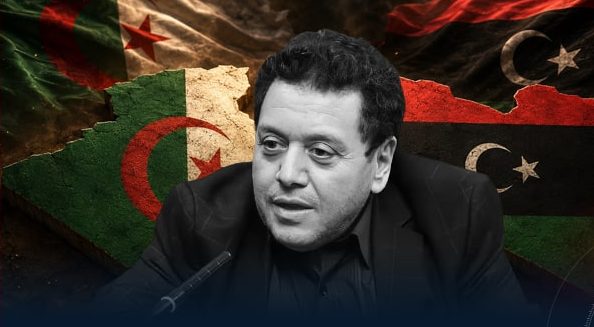
Mohammed Omar Baio, head of the Libyan Media Corporation, authored an article. He posted it on his personal Facebook page. The piece was titled “The Perplexing Libyan Question: What Does Algeria Want?” Baio discussed Libyan-Algerian relations. He described these ties as fraught with anxiety, tension, and mistrust. This has marked their history through various stages.
Baio stated that a nation’s neighbor differs from a residential neighbor. One can move away from a difficult residential neighbor. But a nation’s neighbor does not depart. You cannot move your country away from its neighbors. He considers both a homeland and its neighbors to be destiny.
Baio added that the correct choice between neighbors is peace. This holds true regardless of any disputes. Nations should strive for harmony and remove causes of disagreement. They must also cultivate good neighborly relations and mutual interests. If this proves impossible, Baio suggested a “cold peace” is preferable to “hot neighborliness.”
Baio explained his long-standing observation of Libyan-Algerian relations. This stems from his interest in Libya’s geopolitics. He has monitored these ties through various stages. This includes from Libya’s independence in 1951. It extends to Algeria’s independence from France in 1962. Libyans supported the Algerian people during their armed liberation revolution. This support came after the establishment of their own national state. The Algerian revolution began in 1954.
He believed Algerian leaders should have reciprocated Libya’s favor. However, Baio said this never happened. He asserted the two countries’ relations were tense and distrustful. This was not solely due to border issues. It also involved disputes over the oil-rich Hassi Messaoud region. Furthermore, Algerian foreign policy fluctuated towards Libya across all periods.
Baio affirmed no resentment exists from Libya or its people towards Algeria. This holds true for both the Algerian state and its citizens. He stated no political science or international relations theory explains Algeria’s hostility. He added no neighborly imperative justifies its lack of clarity towards Libya.
He further stated Libya poses no security or strategic threat to Algeria. Algeria’s interest lies in strengthening political and security cooperation with Libya. This is especially vital with terrorism risks returning to the Sahel. These threats are spreading through Mali to Sahara countries.
Baio emphasized that this cooperation should specifically involve the Armed Forces General Command. He said this command protects Libya’s borders. Therefore, it also safeguards Algeria’s borders and security from the Libyan side. Baio noted Algeria previously suffered risks from that region. It incurred substantial costs for its security. This occurred when the area was under rogue militias. It was also controlled by terrorist organizations.
He added that observers know Field Marshal Khalifa Haftar’s dedication to Algeria’s security. This commitment mirrors his focus on Libya’s security. Baio believes the security and stability of both countries are intertwined. He also cited Deputy General Commander Lt. Gen. Saddam Haftar’s similar commitment to security and cooperation.
Baio advised Libya to always prioritize fraternal relations with Algeria. He recommended pursuing active diplomacy to achieve this. He warned against what he termed “excessive and unrealistic” calls. Some voices, perhaps out of anger, advocate for enmity with Algeria. Others suggest joining an anti-Algerian Maghreb alliance. Some also propose intervening in the long-standing dispute between Algeria and Morocco.
Baio concluded by stating the perplexing question remains: “What does Algeria want from Libya?” He said it would stay unanswered indefinitely. The wait for a response might be long. He added Libya’s only rational answer is patience with Algeria. This patience will continue until Algeria understands its own desires. Baio affirmed Libya seeks only peace, security, and state-building. It desires stability and progress. He noted these outcomes would also benefit Algeria.