

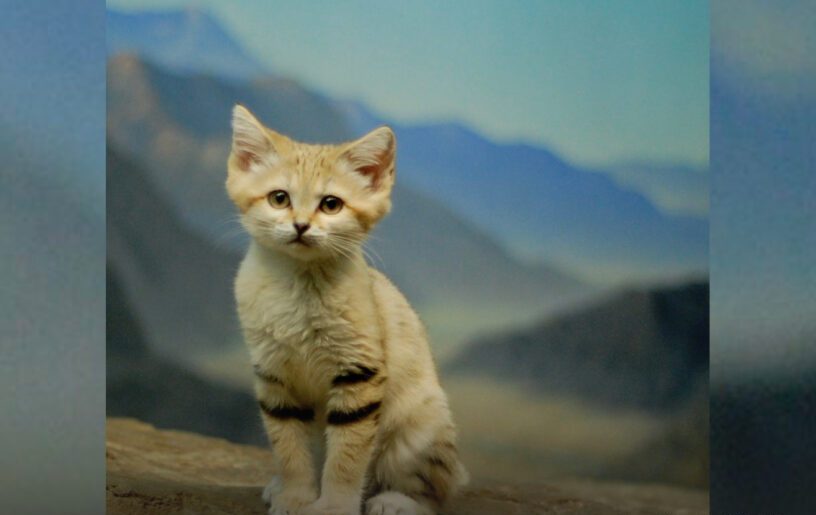
Benghazi – A scientific study covered by The Guardian has confirmed the successful documentation of sand cats in the Libyan desert. Researchers spotted the rare species at 13 different sites, marking a significant environmental discovery that highlights the region’s rich biodiversity and underscores the need for stronger protection programs.
The documentation followed years of monitoring and research, which began in 2017 after Libyan wildlife photographer Mohamed Al-Muntasir published the first concrete evidence of sand cats in Libya with a video recording. That discovery prompted zoologist Firas Haidar to collaborate with Al-Muntasir on an eight-year research project. Their work concluded with the publication of a comprehensive scientific study in February 2026.
The study recorded sand cats at 13 locations, with 15 sightings focused in the remote Wadi Armet area. It also documented the Saharan striped weasel in new locations. Researchers faced major challenges, including poor research infrastructure and security risks in desert areas near the borders.
Ahmed Ajaj, head of the Barari Nature Conservation Organization, told Al-Anbaa Libya that documenting sand cats in Libya is a rare and important environmental event due to the animal’s elusive nature. He warned that the species faces several dangers in its natural habitat, including accidental killings during hunting, destruction of natural habitats, and the threat of illegal trade as exotic pets.
Ajaj explained that sand cats play a crucial role in maintaining the desert’s ecological balance by feeding on rodents. He called for increased national efforts, more support for field research, and awareness campaigns to protect the species and preserve Libya’s natural desert diversity.