

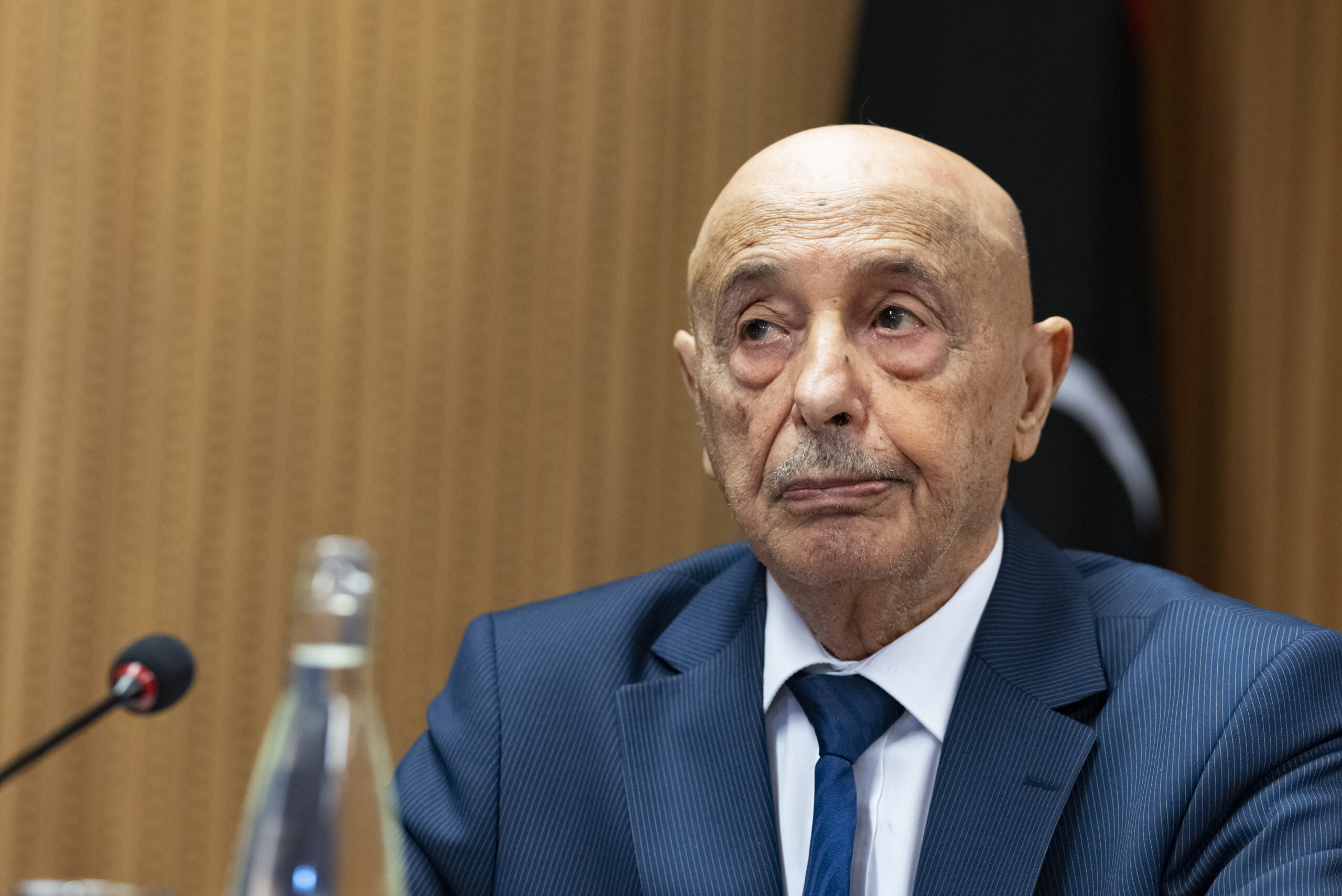
Benghazi – Speaker of the House of Representatives, Aguila Saleh, warned that attempts to impose a de facto situation or make unauthorized changes within the Libyan intelligence agency threaten the country’s stability and deepen divisions.
In an official letter to the heads and directors of intelligence agencies in friendly and allied countries, Saleh outlined recent legal and institutional developments affecting sovereign institutions.
He stated that the House of Representatives has introduced substantial amendments to the laws governing the Libyan intelligence agency over the past three years. These changes are meant to address the country’s challenges and protect sovereign decisions from narrow interests or outside influence.
Saleh emphasized that, according to the most important amendments, the appointment or dismissal of the head of the Libyan intelligence agency must be presented to the House of Representatives and approved in an official session with at least 120 members present. This is to ensure that major security and sovereign decisions reflect a national consensus and to provide additional legal safeguards regarding accountability and investigation procedures, protecting the agency’s independence.
He drew the attention of international intelligence agencies to the fact that the Libyan intelligence agency has faced serious security challenges in recent times. These include armed attacks on some headquarters, incidents involving the smuggling of prisoners, and repeated attempts by armed groups and factions outside legitimate authority to impose a de facto situation on the institution or influence its leadership through illegal means.
Saleh also noted efforts by some executive authorities to provide cover for, or endorse, changes within the agency in violation of current laws. He rejected these moves outright, describing them as violations of legality, the rule of law, and the independence of sovereign institutions.
At the end of his letter, Saleh reaffirmed that the legitimate leadership of the Libyan intelligence agency derives from existing law and established constitutional procedures. He stressed his commitment to upholding the rule of law, the independence of sovereign institutions, and rejecting any attempts to force changes by force or bypass standing regulations.
These developments followed rapid political changes in Libya after the Presidential Council issued a decision to dismiss the head of the Libyan intelligence agency and appointed a new chief. The decision took effect immediately, with relevant authorities instructed to carry out the necessary procedures.
In an official statement, the Presidential Council announced it had held a meeting on Sunday, noting the continued absence of Deputy Chairman Musa Al-Koni, who was out of the country. The Council said it discussed the agenda items and unanimously approved the decisions, acting on its national responsibilities and constitutional powers.
The statement emphasized the need for state institutions to meet regularly and continue carrying out their duties. It urged state leadership to take all measures necessary to maintain security, stability, and the protection of institutions, stressing the importance of prioritizing the national interest.
In response, Deputy Chairman Musa Al-Koni issued a clarification denying the Council’s claims about his absence from the meeting. He stated he participated via video link and was not absent as announced.
Al-Koni added that the meeting included discussions about proposals for appointing the heads of the general intelligence agency and the armed forces’ general staff. However, there was no agreement or consensus on these proposals, and he did not approve any of them. He said that any decisions or recommendations to the contrary do not reflect what actually took place during the meeting and are not based on legal consensus within the Presidential Council.