


Benghazi – The city of Benghazi recently hosted the landmark First Annual Arab Media Conference, transforming into a vibrant forum that brought together veteran media titans and the region’s leading young content creators. Highlights from this rich intellectual exchange were captured by “ET Bilarabi,” a platform known for its coverage of major festivals, celebrity news, and the entertainment industry in the Arab world.
Benghazi: A Meeting Point for Arab Media
The significance of choosing Benghazi as the venue was a recurring theme among participants. Libyan media figure Mohamed Zidan expressed the local sentiment, stating, “The interaction, the experience, the arrival of heavyweight, prominent figures in media—this is something very important. I believe it is a significant and enriching experience, and we hope for years to come that there will be more seminars and courses for this conference, specifically in Benghazi and other regions in Libya.”
The Digital Debate: Revolution or Chaos?
The future of media in the digital age was the most heated topic of discussion. Esteemed journalist Samy Kleib described the landscape as a “major revolution that is still in its infancy,” raising a fundamental question about the need for controls. “How do you regulate this unrestrained revolution?” he asked. “And how do you ensure there is freedom of thought and expression, alongside laws that guarantee it all?”
In contrast, the new generation of media offered a different perspective. Libyan content creator Mohammed Rahalista argued that the relationship between traditional and digital media is one of synergy, explaining, “The conversation was framed as if media and content creation were two opposing things… On the contrary, they are two things that can be complementary to each other.”
The Fundamentals of the Profession vs. Fame
The conference emphasized that digital fame cannot replace professional fundamentals. Media personality Nicole Tannoury pointed to a skills gap among some new faces, noting, “We have many people appearing on social media now who don’t have the ABCs of media.”
This view was supported by media figure Amira El Fadl, who stressed that major media institutions look for more than just numbers. She said that social media celebrities “will not be accepted into a prestigious, high-caliber media institution unless they possess a media personality, solid information, and the ability to convey that information.”
Lessons from Media Veterans
The “My Experience” sessions offered deep, human insights, as industry giants shared lessons from their storied careers. The renowned Dr. Hala Sarhan spoke candidly about the challenges she faced, revealing, “I made a very difficult choice at one point; it was a political choice… Hala Sarhan paid the price, and I paid it willingly.”
Meanwhile, media personality and astrologer Maguy Farah encapsulated the ethical responsibility of the profession in a powerful statement, describing media as both “a front for war and a front for peace… you either have to destroy, or you have to build, depending on your goal.”
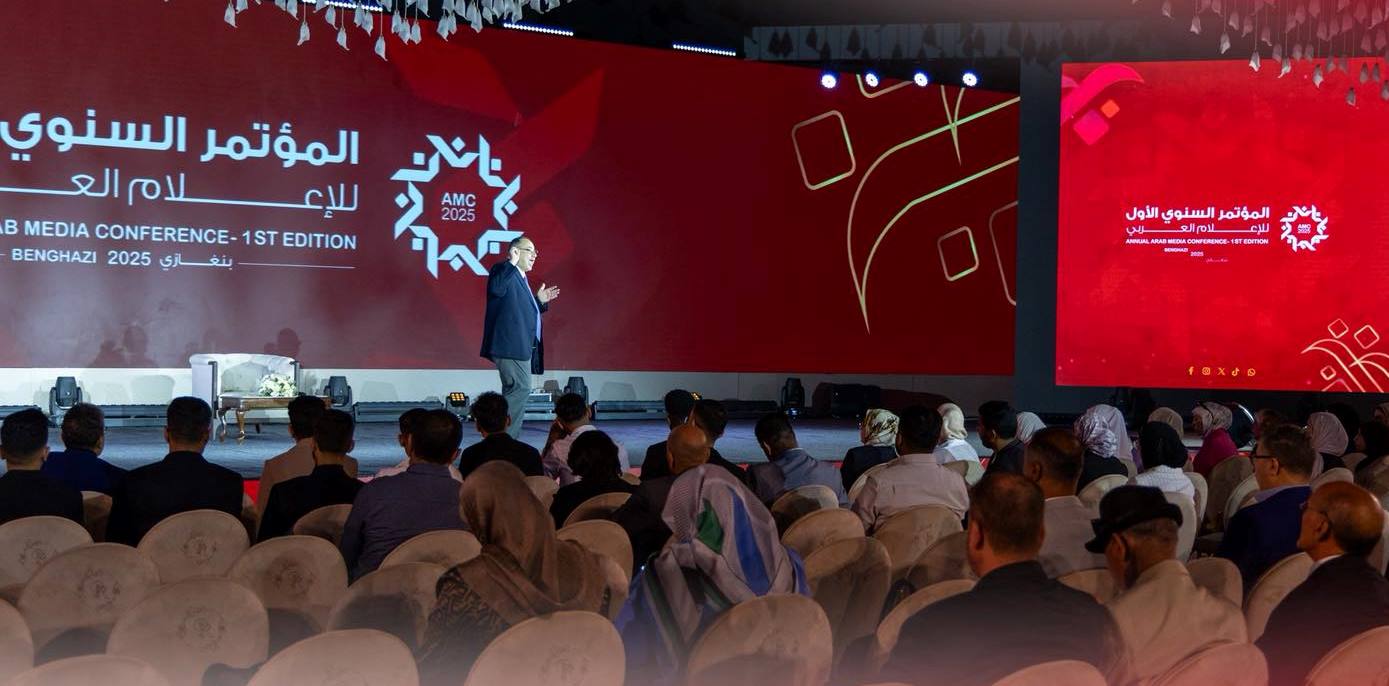
The First Annual Arab Media Conference in Benghazi proved to be more than just a meeting; it was an essential space for the collision of ideas and the convergence of generations. The statements from its participants sketch the outlines of a future media landscape that demands a balance between the freedom of the digital space and a commitment to professional ethics and responsibility. This crucial dialogue, launched from the heart of Libya, is set to resonate throughout the Arab world.