

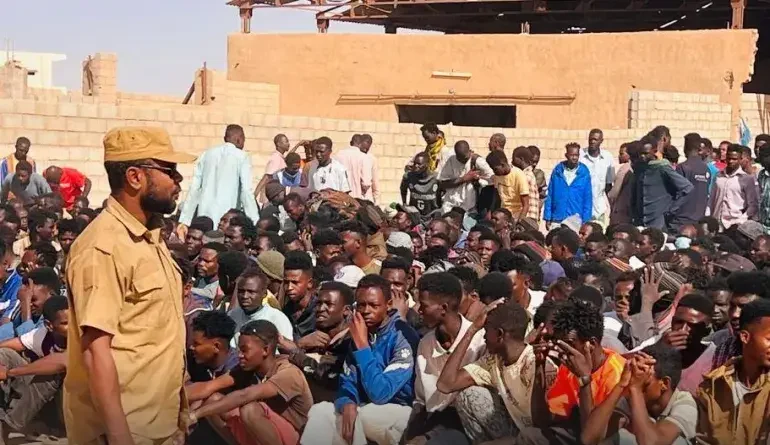
Benghazi – The Libyan News Agency has recently observed widespread anger among Libyans on social media over illegal migration and the rising number of migrants entering the country. Many citizens have posted online expressing frustration over migrants moving freely throughout Libyan cities and regions.
About a year ago, the Minister of Interior in the Government of National Unity said in an official statement that the number of migrants in Libya had exceeded three million, with about 120,000 new arrivals entering nearly every month.
While many people commend the efforts of security agencies, especially the Department for Combating Illegal Migration, some local observers argue that the number of migrants detained and deported remains low compared to the large numbers present across the country.
Several activists and experts claim that the actual number of migrants living in Libya is far higher than the figures released by government authorities.
A group of Libyan political parties issued a joint statement in March, expressing suspicion that international organizations may be involved in a systematic plan to permanently settle migrants in Libya. The parties called on the United Nations and its affiliated organizations to focus on improving migrants’ conditions in their home countries instead of resettling them in Libya.
The statement also urged Libyans to control their anger and avoid direct confrontations with migrants. It called on citizens to let official authorities handle the issue, stressing that it requires decisive and firm government measures.
Legal experts in Libya attribute many migrants’ choice to enter the country to the inability of state institutions to fully control Libya’s vast territory. They add that organized criminal groups have exploited the situation for years, trafficking migrants through remote desert areas.
Libyan activists describe illegal migration as not only a security challenge but also a strain on the nation’s economy and society. Some warn that the influx could lead to systematic resettlement and demographic changes in Libya.
Some activists accuse international organizations of carrying out suspicious plans to keep migrants from crossing into Europe by encouraging them to stay in Libya and other countries.
Others point out that while Libyans cannot live or work abroad without official documents, thousands of migrants in Libya move and work unofficially, without permits, licenses, or paying taxes. They often compete with Libyans for subsidized services such as electricity, water, and healthcare.
The issue remains one of the most pressing concerns for Libyan society, viewed by some as equally important as combating terrorism, drug trafficking, and organized crime.