

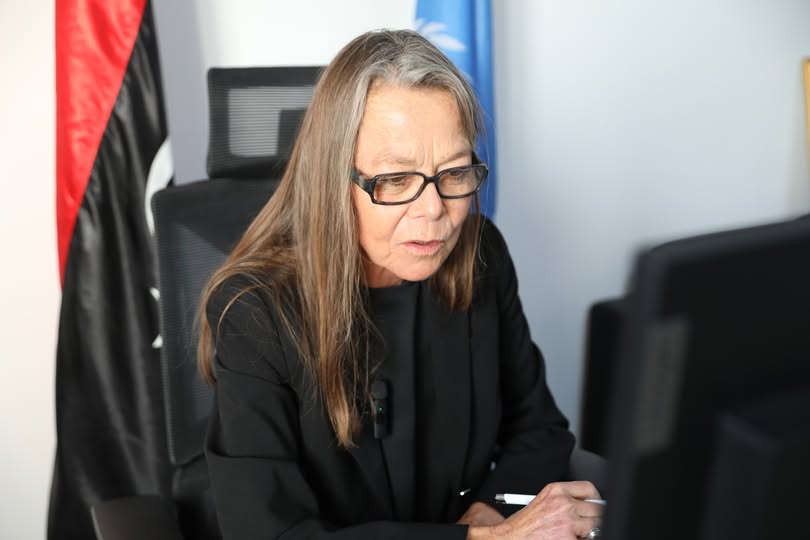
Tripoli – The Deputy Special Representative of the UN Secretary-General and Resident Coordinator in Libya, Ms. Ulrika Richardson, held an online discussion. It focused on the economic track within the structured dialogue. The goal was to formulate recommendations. These recommendations aim to address key economic challenges. They also seek to improve citizens’ living standards.
Richardson responded to questions about inclusivity in the structured dialogue. She emphasized that these issues directly affect the daily lives of families and communities. This particularly applies to women and youth. She stressed the importance of involving diverse groups. This includes people with disabilities. Such inclusion ensures genuine Libyan ownership of the dialogue’s outcomes. She noted that women’s representation in the structured dialogue reached 35%. The United Nations Support Mission in Libya (UNSMIL) established the Libyan Women’s Group. This group aims to enhance women’s participation in key issues.
Richardson also explained that dialogue members stressed the need for effective solutions. These solutions are crucial for managing the country’s wealth. She affirmed the importance of reinvesting revenues. This reinvestment should target vital sectors. Examples include education, healthcare, and infrastructure. A more balanced and transparent approach is essential. This approach applies to resource distribution across Libya’s regions.
Over sixty participants from across the country joined the discussion. They expressed concerns about weak transparency. Limited economic opportunities were also a worry. This was especially true for youth and women. Participants also highlighted the need for economic diversification. They urged a swift agreement on a unified budget. This budget should ensure a more equitable and effective distribution of resources.
Participants also addressed the UN’s role in Libya. They raised questions about its efforts to support the country during the current phase.
This session followed a similar discussion last month. That discussion focused on the governance track. It was held with the Special Representative of the UN Secretary-General, Hanna Tetteh. Another session is scheduled for April 16. This upcoming session will address the security track. It will feature Deputy Special Representative Stephanie Khoury. This session will be open to all Libyans.
The economic track is one of four tracks in the structured dialogue. The other tracks are governance, security, national reconciliation, and human rights. This track focuses on providing practical recommendations. These recommendations are Libyan-led. They aim to strengthen macroeconomic stability. They also seek to improve the management of natural and sovereign resources. Furthermore, they support economic growth and diversification.
Key priorities include developing public financial management. They also aim to enhance transparency and oversight. Establishing accountability-based economic governance is another priority. This will help combat corruption. It will restore citizens’ trust. It will also ensure state resources are managed for the public good.