

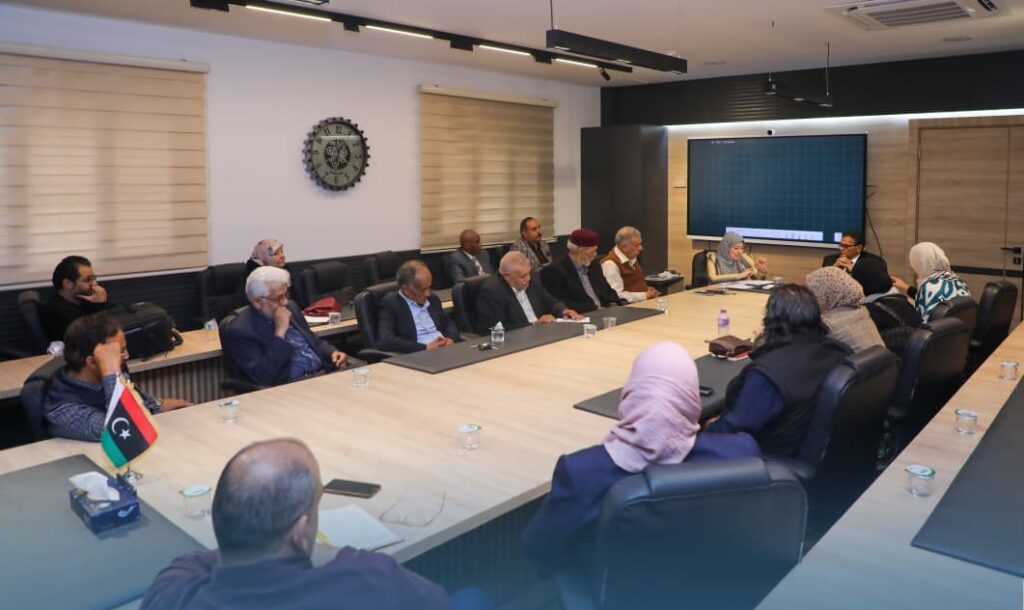
Benghazi – The Libyan International University in Benghazi organized a new cultural evening. It was part of the ‘International Mawanisat Series’ program. The event hosted writer and journalist Salem Ali Al-Abbar. A selection of writers, authors, media professionals, and cultural enthusiasts attended. Media personality Hana Al-Sharif moderated the evening.
Dr. Al-Senussi Al-Taher is the Vice President for Postgraduate Studies. He clarified that this event is part of a monthly cultural program. A specialized committee oversees the program. This committee includes several interested individuals. Hussam Al-Taib, Tariq Al-Shara, and Manaji Ben Halim are among them. The program aims to organize regular cultural activities. These activities host diverse intellectual and literary figures. This strengthens the cultural presence both within and outside the university.
The evening began with a speech. This speech discussed the relationship between creativity and critical reading. It highlighted the convergence of writer and critic. This occurs in an intellectual space. This space moves beyond text production and deconstruction. It seeks to pose deeper questions about meaning.
During his intervention, Al-Abbar reviewed his creative journey. It started with short stories. He later moved into journalistic work. This path combined literary narration and media treatment. He also discussed the evolution of journalistic terms. He explained why ‘Al-Jarida’ (newspaper) is used in some contexts instead of ‘Al-Sahafa’ (journalism).
Al-Abbar emphasized the importance of the ‘journalistic story’. It is a format that blends literature and journalistic work. It offers an engaging style for presenting content. He pointed to the reciprocal relationship between the two fields. Each serves as a source of enrichment for the other.
During the evening, he also discussed differences. These were between short stories and journalistic work. He compared their structure and style. He noted that literary texts reshape reality within narrative work. The language varies according to the writer’s experience and vision.
Speaking about the reality of short stories in Arabic literature, Al-Abbar stressed something. He emphasized the importance of adhering to literary art. He also highlighted addressing humanitarian issues. These issues carry historical and cultural dimensions.
The evening concluded with presentations of his short stories. These stories reflected aspects of his experience. They showcased his use of symbolism and myth. The audience responded interactively.
The ‘International Mawanisat Series’ is a monthly cultural program. Its first episode discussed the political movement in Libya before 1969. It focused on nationalist currents. This is part of an ongoing effort to strengthen the university’s role. The university acts as a cultural and intellectual center in society.