

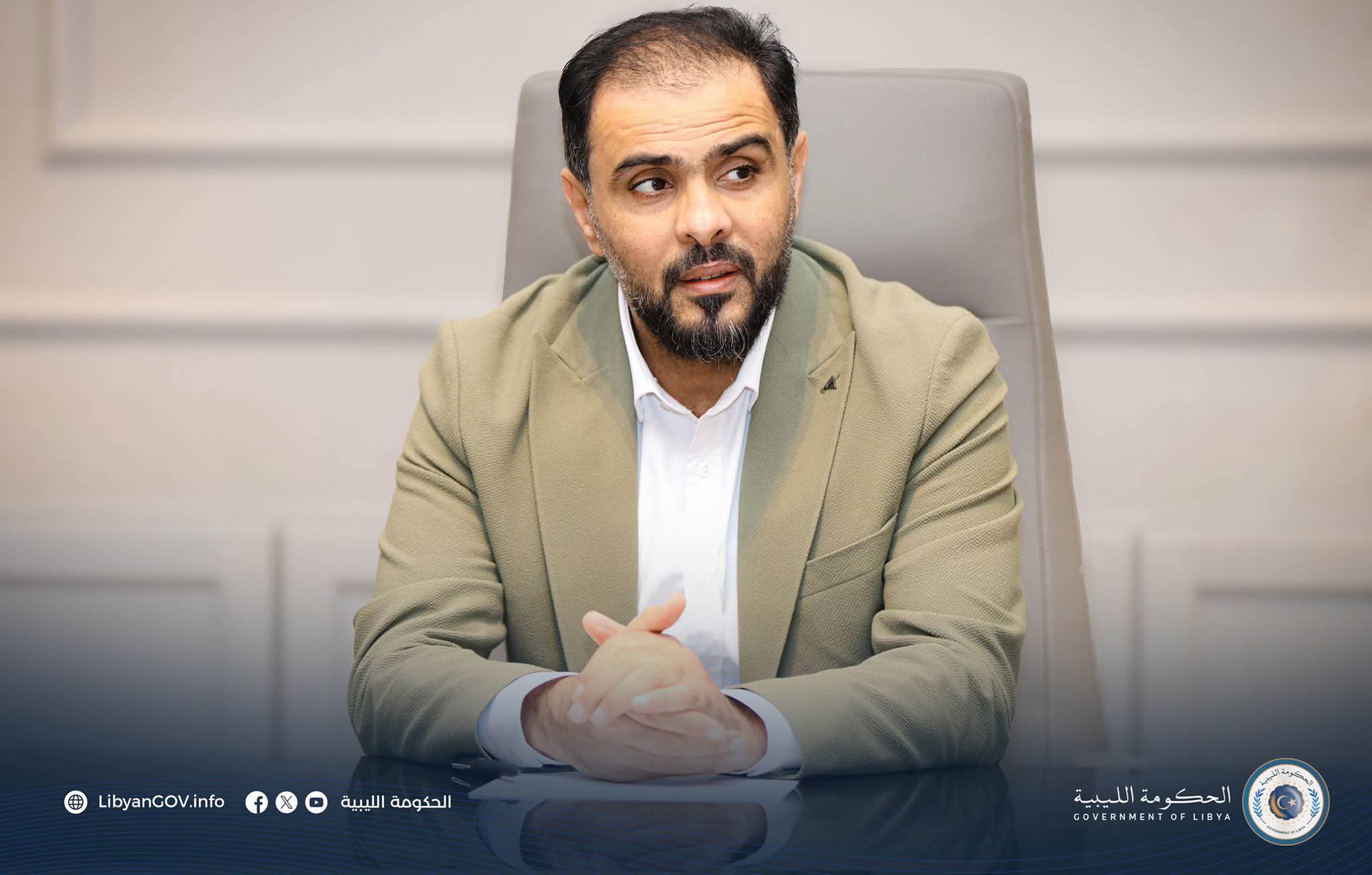
The Libyan government has firmly rejected the unauthorized use of public employees’ financial and banking data outside legal frameworks, emphasizing its commitment to protecting the rights of workers in public institutions.
Response to the Central Bank
In a statement, the government said its position comes in response to the Central Bank’s circular issued on July 30, which it said failed to adhere to official procedures for accessing employees’ financial data. The government stressed that the integrity of the administrative and financial system must not be subject to any political or administrative misuse that could threaten employees’ interests.
Policy Coordination
The statement noted that the government has been in contact with the Central Bank of Libya to implement comprehensive economic and financial reforms. It referred to a meeting held in April that brought together the Central Bank Governor, government officials, and representatives from the Presidential Council, during which all sides underscored the need to coordinate public policies in support of the national economy.
Economic Understandings
The government also revealed a set of economic understandings, including activating the public salary laws, improving the fuel distribution system, expanding sovereign revenue sources, reducing foreign expenditure, and restructuring the diplomatic missions.
Protective Measures
The government asserted it would not hesitate to take legal measures to prevent the misuse of employee data and would act against any threats to their financial or administrative rights. It also reaffirmed its commitment to transparency and fairness in the distribution of salaries and allocations.
Call for Financial Review
The government, headed by Prime Minister Osama Hammad, called on institutions in western Libya to review their financial status in coordination with the Parliament’s Finance Committee, to ensure fair and transparent disbursement within the framework of the national budget.
Automated Payments
In late July, Central Bank Governor Saddek ElKaber and the Minister of Finance in the Government of National Unity, Khaled Al-Mabrouk, agreed to begin the automated disbursement of public sector salaries starting in September, and to initiate work on a unified treasury account system.
“Real-Time Salary” System
On June 31, the Central Bank of Libya announced the launch of the “Ratbek Lahzi” (“Your Salary in Real-Time”) platform—an integrated technical system developed and operated internally by the bank to accelerate salary payments for public sector employees.