
Close Menu
Libya Update NewsLibya Update News
  • Home
  • National
  • Region & World
    • The Maghreb
    • Middle East
  • Business
    • Oil & Gas
    • Economy
    • Analysis
  • Opinion
  • Editors’ Picks
  • Health & Lifestyle
  • Sports
Facebook X (Twitter) RSS
Trending
  • Sebha Prosecution: Seven Arrested for Possession of Banned Pesticides
  • Cases of Blindness and Skin Cracks Among Livestock Due to the ‘Apocratus’ Plant
  • Russia Says It Shot Down 389 Ukrainian Drones as Kyiv Reports Two Killed and Others Wounded in Russian Attack
  • Attempt to smuggle 74 illegal migrants south of the Al-Wahat area thwarted; they were traveling in two vehicles coming from the Chadian border
  • Public Prosecution Orders Closure of 60 Shops and Arrest of Operators for Illegal Trade in Banned Agricultural Pesticides from Al-Zawiya to Ras Ajdir
  • Anti-Illegal Immigration Agency Showcases Its Advanced System in Brussels
  • Bahrain defeats Libya 73-58 in Arab Basketball Championship
  • Bahrain Calls on Security Council to Compel Iran to Halt Attacks and Adopt Accountability Mechanism
  • About Us
  • Contact Us
Facebook X (Twitter) RSS
Libya Update NewsLibya Update News
Subscribe
Saturday, 4 July 2026
  • Home
  • National
  • Region & World
    • The Maghreb
    • Middle East
  • Business
    • Oil & Gas
    • Economy
    • Analysis
  • Opinion
  • Editors’ Picks
  • Health & Lifestyle
  • Sports
Libya Update NewsLibya Update News
Home » Cases of Blindness and Skin Cracks Among Livestock Due to the ‘Apocratus’ Plant

Cases of Blindness and Skin Cracks Among Livestock Due to the ‘Apocratus’ Plant

Saturday, July 4, 2026 Health & Lifestyle 3 Mins Read
Cases of Blindness and Skin Cracks Among Livestock Due to the ‘Apocratus’ Plant

Al-Marj – Marwan Al-Asili, head of the veterinary medical professions syndicate in Al-Marj, warned of serious consequences from the spread of the poisonous “Abu Qrato” plant in local pastures. He said the toxic plant is now a direct threat to the safety of sheep, cattle, and goats, and could cause significant economic losses for livestock owners if urgent measures are not taken to contain its spread.

Al-Asili told the Libyan News Agency that recent floods and weather conditions have fueled the expansion of the plant’s growth in grazing areas. He urged herders to take extra precautions to protect their animals from the plant’s harmful effects.

He noted a worrying increase in reports of severe cases among livestock. These include blindness, swollen ears, cracked and peeling skin, as well as drops in production and an overall decline in herd health.

Al-Asili warned that the danger from this weed is not limited to specific seasons. He explained that it now poses a year-round threat since recent climate events. Waiting until the end of summer or fall is no longer a viable solution for protecting herds. He added that traditional control methods, such as burning and deep plowing, have failed to eradicate the plant.

Al-Asili called on the relevant state authorities to develop an urgent national strategy to combat the Abu Qrato plant. He urged them to supply effective pesticides to eliminate the weed without harming the environment or livestock. He also called for coordinated efforts to safeguard animal resources and stability in the livestock sector.

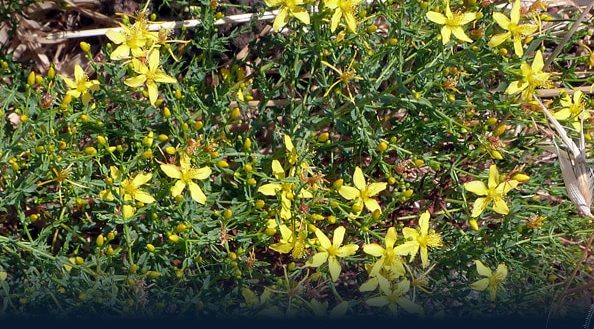
The plant, known locally as “Abu Qrato” and scientifically as Hypericum triquetrifolium Turra, is a perennial wild herb in the St. John’s wort family. It grows naturally across the Mediterranean region, extending to western Iran, and its classification is recognized by the Royal Botanic Gardens, Kew’s “Plants of the World” database.

Its danger lies in compounds that are sensitive to light, particularly hypericin and pseudohypericin. These substances enter animals’ bodies when ingested during grazing and then react with sunlight. This causes primary photosensitization or light-induced poisoning and leads to skin cell damage, especially in exposed or lightly-haired areas.

Symptoms usually present as redness and severe swelling, especially on the face and ears, followed by cracking, ulceration, or necrosis of the skin. Eyes may also be affected, impairing the animal’s ability to see in severe cases, along with pain, reduced mobility, lower productivity, and general health decline. The plant is linked to cases of photosensitization in sheep, goats, and cattle. Risk increases if affected animals remain exposed to sunlight.

Immediate prevention involves removing animals from contaminated pastures and protecting them from sunlight at the first sign of illness. Veterinary examination is necessary to assess and treat skin and eye damage. Controlling the plant’s spread requires identifying its growth areas and combating it with scientific methods that do not harm grazing grounds or livestock.

Follow on Google News Follow on Facebook Follow on X (Twitter)
Share. Facebook Twitter Pinterest LinkedIn Email Reddit Telegram WhatsApp Copy Link
Previous ArticleRussia Says It Shot Down 389 Ukrainian Drones as Kyiv Reports Two Killed and Others Wounded in Russian Attack
Next Article Sebha Prosecution: Seven Arrested for Possession of Banned Pesticides

Keep Reading

German Study: Heavy Use of Short Videos Increases Stress and Weakens Attention in Young People

France reports first Ebola case and imposes strict isolation and containment measures

Study: Walking 5 Minutes Every Hour Reduces Fatigue, Improves Mood Without Affecting Productivity

Open-heart surgeries continue at Tripoli University Hospital

Confirmed Ebola cases in Congo rise to 933

Organ Support Organization: Kidney and Liver Transplant Patients in Libya Without Immunosuppressive Drugs for 4 Months

Follow us on Twitter

The Libya Update Follow

Stay ahead of the curve with The #Libya Update - your go-to source for news and insights on Libyan politics, business, culture, and more. #LibyaNews

TheLibyaUpdate
thelibyaupdate The Libya Update @thelibyaupdate ·
12h

Public Prosecution Orders Closure of 60 Shops and Arrest of Operators for Illegal Trade ...in Banned Agricultural Pesticides from Al-Zawiya to Ras Ajdir

Reply on Twitter 2073318618452959493 Retweet on Twitter 2073318618452959493 Like on Twitter 2073318618452959493 Twitter 2073318618452959493
thelibyaupdate The Libya Update @thelibyaupdate ·
22h

Anti-Illegal Immigration Agency Showcases Its Advanced System in Brussels

Reply on Twitter 2073159668541599868 Retweet on Twitter 2073159668541599868 Like on Twitter 2073159668541599868 Twitter 2073159668541599868
thelibyaupdate The Libya Update @thelibyaupdate ·
3 Jul

Bahrain Calls on Security Council to Compel Iran to Halt Attacks and Adopt Accountability... Mechanism

Reply on Twitter 2073073365871452181 Retweet on Twitter 2073073365871452181 Like on Twitter 2073073365871452181 1 Twitter 2073073365871452181
libya update
Facebook X (Twitter) RSS

News

  • National News
  • The Maghreb News
  • Middle East News
  • Business News
  • Sports News

Company

  • Information
  • Ethics Policy
  • Corrections Policy
  • Fact-Checking Policy
  • GDPR Policy

Categories

  • Editors’ Picks
  • Opinion
  • Health & Lifestyle
  • Videos
  • Infographics

Subscribe to Updates

    © 2026 All copyrights reserved. The Libya Update.
    • About Us
    • Privacy Policy
    • Advertising

    Type above and press Enter to search. Press Esc to cancel.