

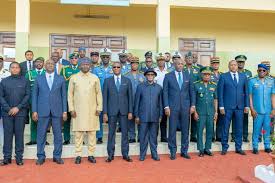
Yaounde – Nigeria and Cameroon have signed a memorandum of understanding on security and defense cooperation. The agreement aims to secure their shared southern border and counter land and maritime threats, amid ongoing complex security challenges in the Lake Chad Basin, the Sahel, and West Africa.
The signing took place in the Cameroonian capital, Yaounde. Nigeria’s Minister of Defense, General Christopher Musa, and Cameroon’s minister delegate at the presidency for defense, Joseph Beti Assomo, signed the document after two days of deliberations between defense and security experts from both countries.
General Musa described the agreement as a key step toward deepening bilateral defense cooperation and securing the shared border. He said the memorandum would provide an institutional framework for military operations and collaboration, helping address mutual security concerns.
Minister Assomo emphasized Cameroon’s commitment to strengthening this partnership. He revealed plans for transforming bilateral arrangements in defense and military technology into practical steps on the ground.
The cooperation covers enhanced operational coordination, intelligence sharing, logistical support, joint military training, personnel exchange programs, and the development of collective response mechanisms for emerging threats. The two sides also agreed to activate a recently established joint maritime task force, which will serve as a platform to boost maritime security and protect economic interests in the Gulf of Guinea, an important corridor rich in oil and gas.
This agreement comes amid a complex regional security environment. Nigeria and Cameroon are central to efforts against terrorism in the Lake Chad Basin, where Boko Haram and ISIS-West Africa remain active across borders despite multinational military operations involving Nigeria, Chad, Cameroon, and Niger.
The accord is also part of broader attempts to contain security fallout in the Sahel region, which faces increased activity from armed groups and political instability, adding to the challenges of border security and regional smuggling.