

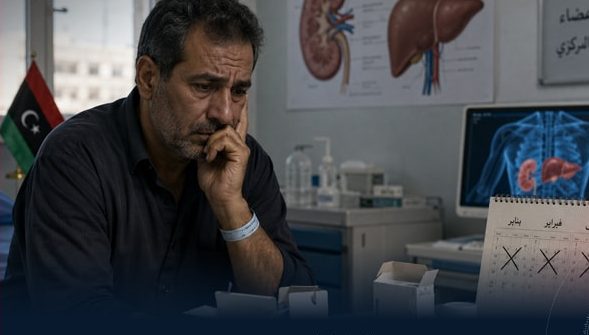
The head of the Libyan Organization for Organ Support has warned that kidney and liver transplant patients in the country have been without immunosuppressant drugs for nearly four months, putting about 2,200 patients at serious risk.
He told Libya Al-Ahrar TV that the situation has reached a dangerous point, with not a single pill or capsule available for transplant recipients. Patients have been forced to buy medicine from the black market and from pharmacies in different Libyan cities.
He questioned how officials could accept this crisis, especially as the drug Prograf has been completely unavailable for the past four months. He stressed that those responsible have a duty to address the shortage.
The official described the continued organ transplants under these conditions as a major dilemma. He expressed surprise that surgeries were still being performed without the essential post-transplant medications.
Despite these issues, he praised the competence of young surgeons at Tripoli Medical Center, calling it one of the most successful transplant centers in the Arab world. He said the city of Sirte comes next in this field.
According to the official, after surgery, patients receive only one box of medication—enough for five days. In one case, a recent kidney recipient was given expired medicine.
He emphasized that responsibility lies with the surgeons performing the operations. He called for lifelong contracts between patients and hospitals to guarantee regular monitoring and medicine supply.
The organization head noted that over 2,200 kidney transplant patients are suffering, and some have already died. He criticized center managers for performing transplants when vital medications are not available.
He concluded by stating that 9,542,043 euros would be enough to provide immunosuppressant drugs for all organ transplant patients in Libya. He questioned whether this amount is significant compared to the millions wasted in the east, west, and south, while patients risk losing their transplanted organs—or their lives—due to the drug shortage.